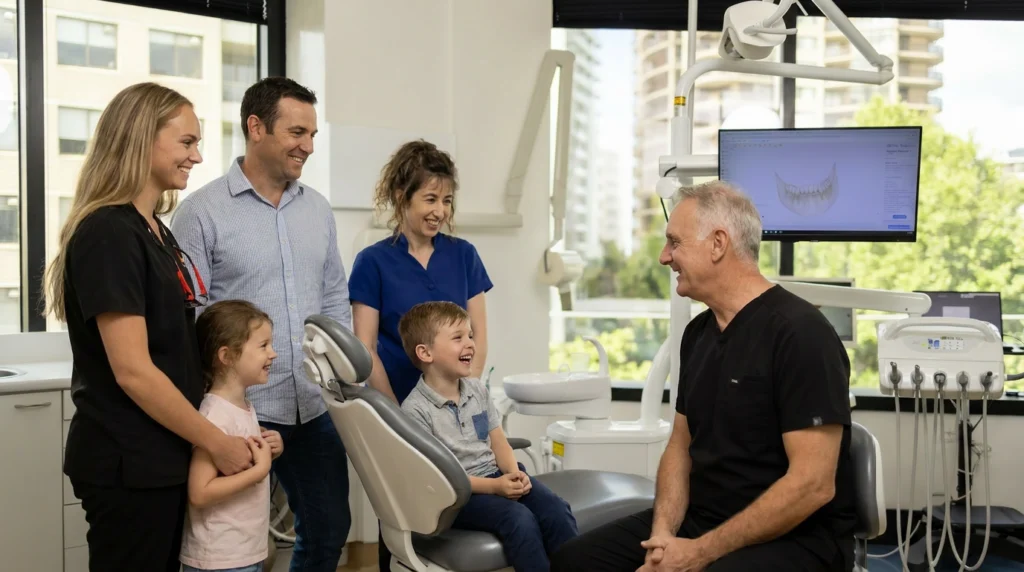


You might be feeling worn out from trying to fit your child or loved one with special needs into appointment slots that were clearly not designed for your life. Maybe you have waited months for a visit, only to have a meltdown in the car, a medication issue, or a bad sensory day turn that long awaited appointment into a missed opportunity and another wave of guilt. A mobile dentist for special needs dental care in San Jose can help change that experience by coming to you instead.
If that sounds familiar, you are not alone. Many families caring for someone with special health care needs discover very quickly that “standard office hours” and rigid policies simply do not match the reality of their days. Because of this tension, you might wonder if it is even possible to get consistent dental care without constant stress.
The good news is that it is possible. When a special needs dentist offers flexible scheduling, it does more than move time slots around. It changes the entire experience. It reduces anxiety. It improves cooperation. It can even improve oral health outcomes over time. This is why flexible scheduling in special needs dental practices is not a luxury. It is part of quality care.
It helps to understand what is making things so hard, and how a practice that truly understands special needs can make your life easier, not harder.
Why are “regular” dental appointments so hard for special needs families?
For families caring for someone with developmental, cognitive, physical, or medical challenges, almost nothing about a “standard” appointment feels standard. The American Academy of Pediatric Dentistry highlights that children with special health care needs often require extra time, modified approaches, and careful planning for successful visits. You can see this reflected in their clinical guidelines for patients with special health care needs.
Think about a typical appointment. You are told to arrive 15 minutes early. The waiting room is noisy. The schedule is packed, so everything runs a bit behind. The lights are bright. There may be strong smells. Staff may not be familiar with communication devices, sensory tools, or behavioral plans. For a neurotypical child or adult, this is inconvenient. For a person with autism, sensory processing issues, anxiety, or complex medical conditions, it can be overwhelming.
Now add your reality on top of that. Maybe your loved one takes medications that affect saliva, appetite, or behavior. Maybe there are seizures, mobility challenges, or feeding issues. Maybe school or therapy appointments already fill the calendar, so you have only a small window when your child is at their best. When a practice insists on rigid appointment times, late fees, or strict cancellation rules, the pressure on you grows. You start to dread visits, or you put them off entirely.
So the problem is not just “finding a dentist.” It is finding a special needs dentist who understands that time, timing, and flexibility are part of the treatment plan.
How does rigid scheduling actually affect oral health and behavior?
It can help to look at what happens over time when scheduling does not match your loved one’s needs. Missed appointments are the obvious issue, but the ripple effects go further.
When visits are rushed because a provider is running late or trying to stay on a strict timetable, there is less room for desensitization, breaks, or gradual exposure. Research on behavior and dental care for children with autism and other developmental conditions stresses the importance of preparation, predictability, and patience to improve cooperation. If the time is not there, everyone feels pushed. That pressure often leads to more resistance, which can then lead to the use of restraint or sedation that might have been avoided in a calmer, better timed visit.
On the clinical side, irregular care means small problems are missed until they become big ones. There is evidence that children with special health care needs experience higher rates of untreated dental disease and often need more invasive treatment under general anesthesia. Early, frequent, and well timed preventive visits can reduce this burden, but only if you can actually get to those visits.
Recent studies have also pointed out how complex medication regimens, feeding challenges, and chronic illnesses affect oral health and the ability to attend traditional appointments. For example, a 2024 study of parents of children with special needs found that caregiver stress, medical appointments, and behavior challenges were major barriers to regular dental care, not just lack of providers. You can see similar themes in reviews of barriers to oral health access for special needs populations, such as this recent research on caregiver experiences and this study on access to oral health services for children with disabilities.
So the question becomes, if time is one of the biggest barriers, what does a truly flexible, person centered schedule look like in a special needs dental practice.
What does flexible scheduling look like in a special needs dental office?
A practice that prioritizes flexible scheduling is not just offering “early and late” appointments. It is rethinking the entire scheduling process around the patient’s needs rather than the practice’s convenience.
Here are a few examples of what that can mean in real life.
- Offering first or last appointments of the day for patients who need a calmer environment or who do best when they are not waiting.
- Building in longer time slots so the dentist and team are not rushed and can allow breaks, desensitization, or step by step introductions to tools.
- Allowing you to choose time windows that match medication schedules, feeding times, or school and therapy routines.
- Using “quiet hours” with reduced noise and traffic for patients with sensory challenges.
- Having more forgiving cancellation or rescheduling policies when there is a seizure, illness, or behavioral crisis.
In other words, special needs dental scheduling is a clinical strategy, not just an office policy. When the timing is right, your loved one is calmer. When your loved one is calmer, the team can often do more with less distress. Over time, this builds positive associations instead of fear.
How does flexible scheduling compare with a traditional approach?
It can be useful to see the differences side by side. This is not about blaming traditional offices. It is about giving you language to identify what you need and to ask the right questions when choosing a provider.
| Aspect | Traditional Dental Scheduling | Flexible Special Needs Scheduling |
|---|---|---|
| Appointment Length | Standard short time slots, little room for breaks | Extended visits with planned breaks and slower pacing |
| Time of Day Options | Limited to office convenience, peak busy times | First or last of the day, quiet hours, matched to patient’s best time |
| Waiting Room Experience | Unpredictable wait times, crowded environment | Efforts to reduce waiting, direct rooming when possible |
| Cancellation Policies | Strict rules, fees, little allowance for medical or behavioral issues | More understanding of last minute changes due to health or behavior |
| Caregiver Stress | High, due to fear of meltdowns, judgment, and financial penalties | Lower, because the schedule is built around real life needs |
| Long Term Oral Health | Higher risk of missed visits and untreated problems | Better chance of consistent preventive care and early treatment |
When you see it laid out this way, it becomes clear that flexible scheduling is not just about convenience. It is about safety, dignity, and realistic access to care.
What can you do right now to find or create better scheduling options?
You may not be able to change an entire system overnight, but you do have more influence than you might feel you do. A few focused steps can make a real difference.
1. Name your child’s or loved one’s “best window” clearly
Before you call any dental office, take a moment to think about when your loved one usually does best. Is it early morning, early afternoon, or after a nap. Consider medications, feeding schedules, and therapy times. When you call, say something like, “My child has special needs and does best between 9 and 11 in the morning, with extra time and minimal waiting. Do you have appointments that can work with that.”
The way the office responds will tell you a lot. Even if they cannot offer the perfect time, you will hear whether they are trying to work with you or simply fitting you into their system.
2. Ask specific questions about flexible policies
General questions like “Are you good with special needs” often get general answers. Instead, ask concrete questions about scheduling and accommodations, such as:
- “Can we book the first or last appointment of the day to reduce waiting time.”
- “Are longer appointments available for patients who need extra time.”
- “What happens if we have to cancel the morning of the appointment because of a seizure or behavioral crisis.”
- “Can we have a quiet room or go straight to a treatment room if the waiting room is overwhelming.”
A practice that truly understands special needs dental care will have thoughtful answers, even if they are still working on improving their systems.
3. Build a simple “appointment plan” with the dental team
Once you find a practice that is willing to be flexible, work together to create a brief appointment plan. This might include:
- Your loved one’s best time of day and typical triggers.
- How long they usually tolerate being in the chair before needing a break.
- Preferred communication approaches, such as visual supports, social stories, or step by step explanations.
- Any medical or behavioral safety concerns.
Ask that this plan be added to the chart and used when scheduling. Over time, as your loved one becomes more comfortable, you can adjust the plan. The key is that the schedule reflects their needs, not just the dentist’s calendar.
Moving forward with more confidence and less pressure
You carry a lot. Juggling therapies, school, medical visits, and daily care is already a full time job. Dental care should support your efforts, not add another layer of stress and guilt. When you prioritize flexible scheduling and seek out a special needs dentist who understands why it matters, you are not being demanding. You are advocating for care that respects your loved one’s abilities, limits, and potential.
You do not have to solve everything at once. Start with the next appointment. Ask for the time of day that truly works. Ask for the extra minutes you know you will need. Pay attention to how the practice responds. Over time, these small steps can add up to calmer visits, better oral health, and a little more breathing room for you.
You deserve a dental team that sees you, listens to you, and is willing to shape the schedule around real life. That is what truly flexible special needs dental care looks like in practice.
Apart from that, if you want to know more about Services Offered By Most Family Dental Practices then visit our Health category.