
A dental home is one trusted dental practice that looks after your family on an ongoing basis, rather than a different clinic each time something hurts. Its three main advantages are earlier prevention with fewer emergencies, less fear and more trust (especially for children), and a clear long-term plan that tends to save teeth, time and money.
If your family’s dental care currently runs on emergencies, rushed appointments with whoever has an opening, or long gaps between cleanings, you are not alone. Many parents only realize how stressful that pattern is once they try the alternative. Local options such as family dentistry in Sunnyvale show what consistent, relationship-based care can look like in practice. This guide explains what a dental home is, the three advantages in detail, and how to set one up for every member of your household.
What Is a Dental Home?
The American Academy of Pediatric Dentistry (AAPD) describes a dental home as an ongoing relationship between a dentist and a patient, comparable to the relationship a family has with a pediatrician or primary care doctor. It is not just a building you visit. It is a partnership that covers preventive care, urgent problems, referrals and guidance as your children grow.
The AAPD recommends that children have a first dental visit by their first birthday, or within six months of the first tooth appearing. That early visit is less about treatment and more about starting the relationship, checking development and giving parents practical advice on brushing, feeding and teething.
A dental home typically provides:
- Regular checkups and cleanings with a team that knows your history.
- Preventive treatments such as fluoride varnish and sealants where appropriate.
- Records and X-rays kept in one place so changes can be compared over time.
- A known point of contact when a tooth breaks or pain starts.
- Referrals to specialists, such as orthodontists or oral surgeons, when they are needed.
- Advice tailored to each family member’s age, habits and risk level.
The Problem With “As Needed” Dental Care
Without a dental home, a familiar cycle develops. A tooth starts to hurt. You look for any clinic with an opening. A dentist who has never seen your family fills out a new chart, takes new X-rays and provides a short-term fix. Life gets busy, preventive visits slip, and months or years later the cycle repeats, often with a bigger problem.
That pattern costs more than it seems. A small cavity that could have been treated with a simple filling can progress to the point of needing a root canal or extraction. Children learn to associate the dentist with pain. Adults begin avoiding appointments because they expect bad news. Each new office means repeating medical histories, which raises the chance that something important is missed.
Advantage 1: Earlier Prevention and Fewer Emergencies
When your dentist already knows your family, they are not meeting your teeth for the first time during a crisis. They understand each person’s history, risk factors and habits, which makes prevention far more effective.
Consider a small cavity starting between two back teeth in a child. In a reactive system, nobody notices until it hurts, by which point decay may be close to the nerve and treatment is more involved. In a dental home, a dentist comparing this year’s X-ray with last year’s can spot the early shadow, treat it with a small filling or monitor it with extra fluoride, and avoid a painful episode altogether.
The AAPD notes that children with a dental home are more likely to receive preventive services and routine care. Prevention at this level typically includes:
- Fluoride varnish applied at checkups for children at higher risk of decay.
- Dental sealants on the chewing surfaces of back teeth, where cavities often start.
- Early checks of bite development and jaw growth.
- Monitoring gum health in teens and adults before it becomes gum disease.
- Checking existing fillings and crowns so worn ones are replaced on a plan, not in an emergency.
Advantage 2: Less Fear and More Trust
Think about how a child feels walking into a different office every time: new faces, new sounds, new rules. For many children that alone triggers anxiety, and pain on top of it makes a cooperative visit much harder.
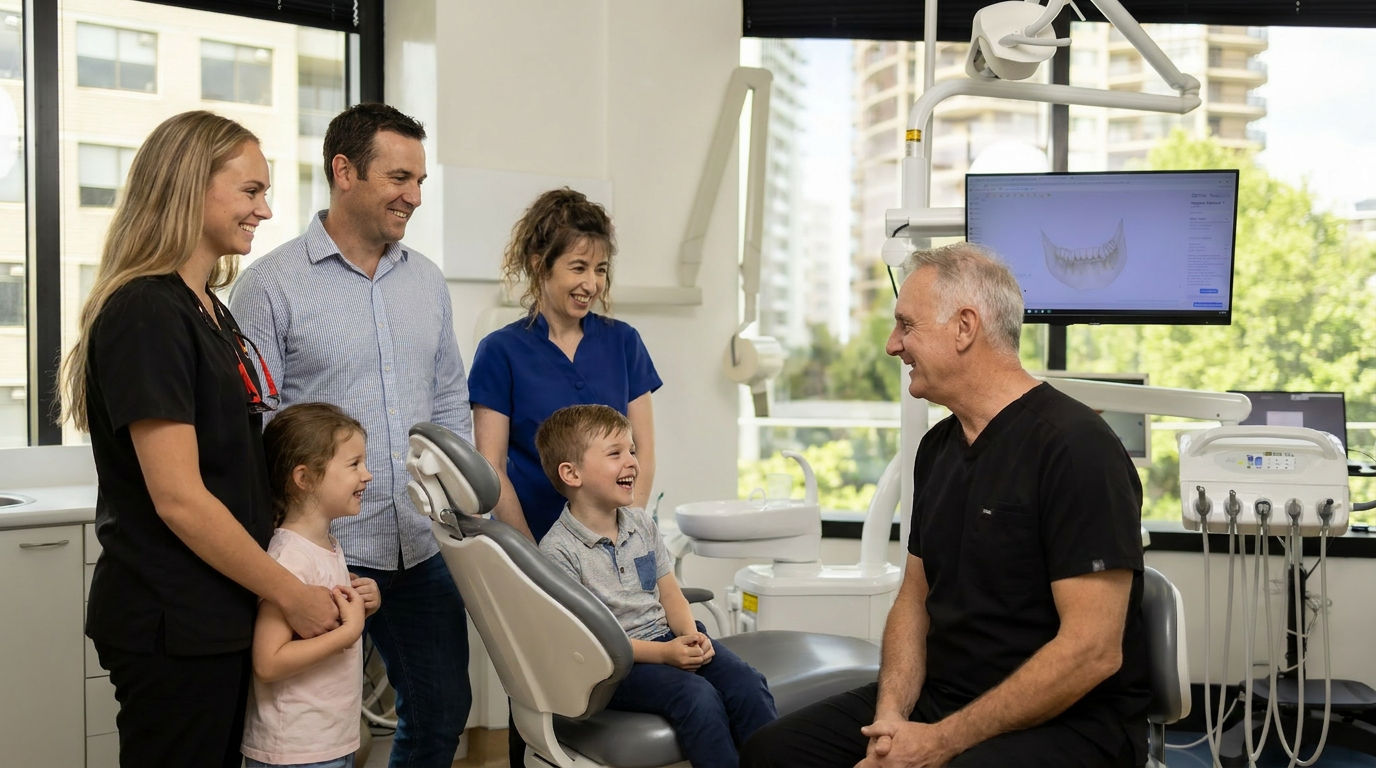
Now picture the same child returning to an office they have visited since they were small. The front desk greets them by name. The hygienist remembers they dislike the suction and explains each step in familiar words. Over repeated visits, the dental chair becomes a normal part of life rather than something to dread.
Trust matters for adults too. When you know your dentist, you are more likely to mention sensitivity, admit you have not been flossing, or raise questions about cost and cosmetic goals. That honesty lets the dentist tailor advice and avoids the misunderstandings that come with one-off appointments.
Practical ways a dental home reduces anxiety
- Short, positive “get to know you” visits for toddlers before any treatment is needed.
- Scheduling children at times of day when they are rested, not tired or hungry.
- Agreeing on a stop signal so patients of any age feel in control.
- Keeping the same hygienist where possible, so faces stay familiar.
- Notes in the chart about what helps each person stay calm.
Advantage 3: Clear Planning and Better Long-Term Outcomes
A stable family dentist lets you plan instead of react. Rather than facing each problem as a surprise, you can map out what each family member is likely to need over the next few years and budget for it.
| Life stage | What a dental home typically plans for |
|---|---|
| Infants and toddlers | First visit by age one, teething and feeding advice, early fluoride guidance, checking habits like thumb sucking |
| School-age children | Sealants on new molars, sports mouthguards, monitoring of the bite and timing of any orthodontic referral |
| Teenagers | Orthodontic care, wisdom tooth monitoring, gum health during braces, diet and sports-drink habits |
| Adults | Gum health, replacement of older fillings or crowns, grinding and jaw issues, cosmetic goals on a planned timeline |
| Older adults | Dry mouth from medications, root decay, dentures or implants, and coordination with medical care |
Seeing the whole family over time also reveals patterns. If several family members have a high cavity rate or weak enamel, your dentist may suggest more frequent cleanings, prescription-strength fluoride toothpaste or dietary changes for the whole household. That kind of long view is hard to achieve when you start from scratch with a new dentist each time.
Dental Home vs. “As Needed” Care
| Aspect | With a dental home | As-needed or emergency-only care |
|---|---|---|
| Type of visits | Regular checkups, cleanings, preventive treatment and early intervention | Mostly urgent visits when pain or visible problems appear |
| Stress level | Usually lower; visits feel familiar and predictable | Usually higher; visits linked to pain and new offices |
| Costs over time | Smaller, planned expenses and fewer major surprises | Fewer visits at first, then larger bills when problems are advanced |
| Child’s experience | Builds trust with a known team and better cooperation | Different providers each time, more fear, more resistance |
| Health outcomes | More prevention and earlier treatment | Higher risk of advanced decay, infection and tooth loss |
| Records | One continuous history and X-ray set | Fragmented records across clinics |
How to Establish a Dental Home for Your Family
1. Choose a dentist who can see everyone
Look for a practice that welcomes both children and adults, or a pediatric and general practice that work closely together. Read reviews for comments about how the team treats nervous patients and children. Our article on choosing a dentist who offers complete smile care covers what a full-service practice can offer. When you call, ask:
- Do you see patients of all ages, including toddlers?
- How do you handle a frightened child or anxious adult?
- How far ahead do you book checkups, and do you offer early morning, evening or weekend slots?
- How do you handle emergencies for existing patients, including after hours?
- Which insurance plans do you accept, and do you offer payment plans?
2. Book baseline visits for everyone
Schedule a checkup for each family member, even if nobody is in pain. Use the visit to get a clear summary: what is stable, what needs attention now, and what might need care in the next few years. For a child’s first appointment, it helps to prepare; see our list of questions parents should ask at a child’s first dental appointment.
3. Commit to a realistic routine
Work with your dentist on a schedule you can actually keep. Many families are seen every six months, while people with higher risk may be advised to come more often. Put appointments on a shared calendar and treat them like school or work commitments. Booking the whole family on the same day or back-to-back can make this far easier to sustain.
4. Keep up the habits that matter most at home
- Brush twice a day with fluoride toothpaste, helping young children until they can do it well themselves.
- Clean between teeth daily once teeth touch.
- Limit sugary snacks and drinks between meals.
- Use a mouthguard for contact sports.
- Call your dental home early when something feels wrong, rather than waiting for it to hurt.
Common Mistakes to Avoid
- Waiting until a child has a problem before their first visit.
- Switching dentists frequently for convenience, which breaks the continuity that makes a dental home valuable.
- Skipping adult checkups while keeping children’s appointments; parents’ habits and oral health affect the whole family.
- Not transferring records when you move; ask your previous dentist to send X-rays and notes.
FAQs
What does dental home mean?
A dental home is an ongoing relationship with one dental practice that provides your preventive care, treatment, emergency help and referrals. The idea is promoted by the American Academy of Pediatric Dentistry and mirrors the concept of a medical home with a pediatrician or family doctor.
When should a child get a dental home?
The AAPD recommends a first dental visit by a child’s first birthday or within six months of the first tooth coming in. Establishing a dental home early lets the dentist give feeding and brushing advice and spot problems before they cause pain.
Can the whole family use the same dental home?
Yes. Many general and family dentists see patients of all ages, which makes scheduling easier and lets the dentist notice patterns across the household. Some families pair a pediatric dentist for children with a general dentist for adults, and that works too if both are seen consistently.
Does having a dental home save money?
It often reduces the chance of large, unexpected bills because problems are caught while they are smaller and cheaper to treat. Your actual costs depend on your insurance, your risk level and the treatment you need, so ask your dentist for a cost estimate before major work.
What if we move or change insurance?
Find a new practice as soon as you can and ask your previous dentist to transfer your records and X-rays. Continuity of records helps the new dentist pick up where the last one left off.
Bottom Line
A dental home turns dental care from a series of emergencies into a steady routine. Choose one practice your family feels comfortable with, book baseline checkups for everyone, and keep a schedule you can maintain. If anyone has pain, swelling or a broken tooth, contact a dentist promptly rather than waiting. To learn more about how prevention fits in, read about the role of preventive care in family dentistry services, or browse our Health category for more family wellness guides.