

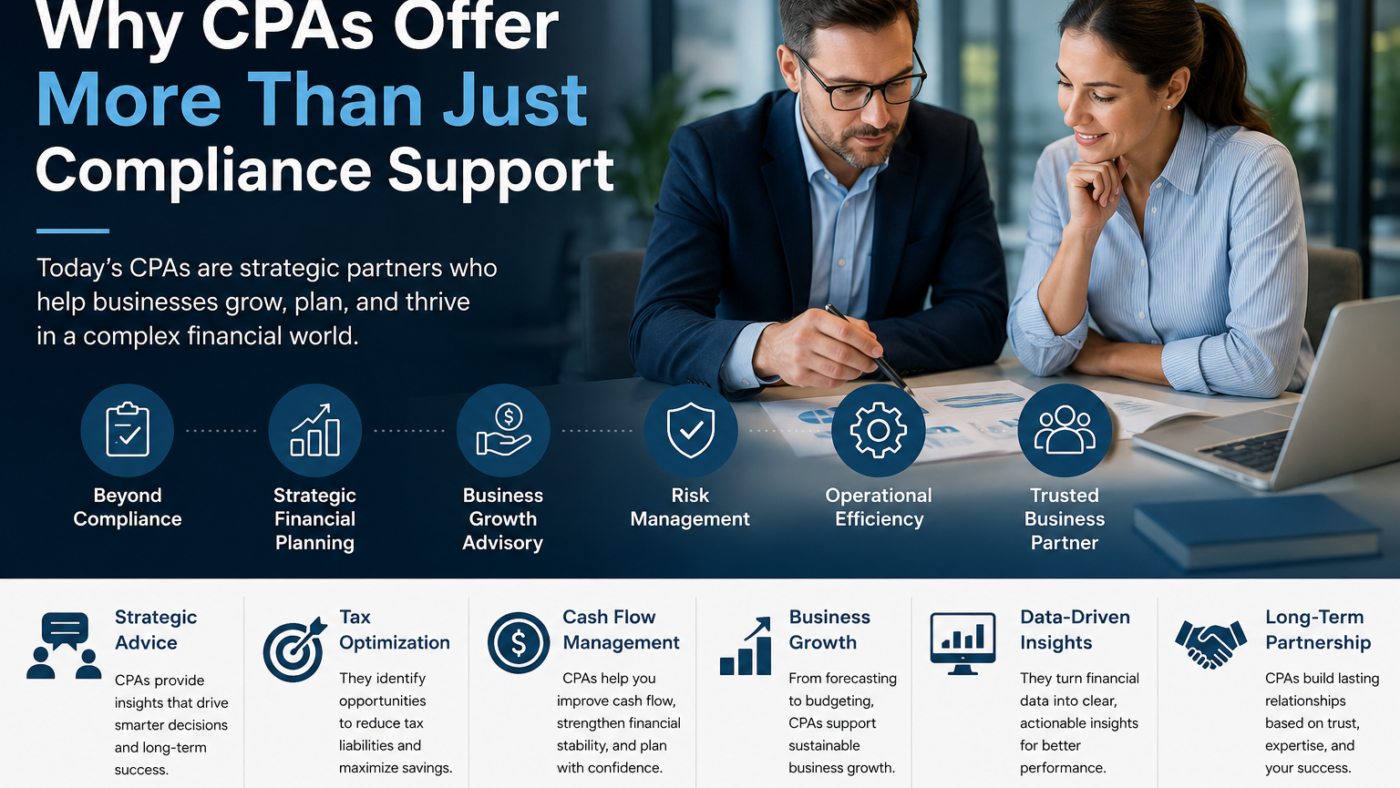
You might be feeling pulled in two directions at once. On one side, there is the pressure to file on time, keep records clean, and avoid mistakes, especially when relying on a payroll tax filing service in Orem, UT. On the other hand, there is the bigger question that keeps showing up when things quiet down for a moment. Are you only trying to stay compliant, or are you trying to build something steady and smart?
That tension is real. Many people first turn to a certified public accountant because something feels urgent. Maybe tax deadlines are closing in. Maybe the books do not tell a clear story. Maybe growth has made simple money decisions feel harder than they used to. The good news is that a CPA can do far more than help you check boxes. A strong CPA helps you reduce risk, understand your numbers, and make decisions with more confidence.
That is the short answer behind why CPAs offer more than just compliance support. Yes, compliance matters. But the deeper value often comes from planning, controls, forecasting, and calm guidance when the stakes feel high.
Why does compliance support alone leave so many people feeling stuck?
Compliance work solves an immediate problem. It helps you meet tax rules, reporting duties, and recordkeeping standards. That matters, because mistakes can cost money, time, and trust. But if that is all you get, you may still be left with the same worries you had before. Why is cash tight even when revenue looks good? Why do surprises keep showing up? Why does every major decision feel like a guess?
Because of this tension, you might wonder whether accounting support is supposed to feel reactive. It does not have to. A CPA often helps you move from cleanup mode to decision mode. Instead of only looking backward at what already happened, they can help you look ahead at what is coming next.
Think about a small business owner who files taxes correctly every year but has no clear process for approvals, reconciliations, or expense tracking. On paper, that business may be compliant. In practice, it may still be exposed to errors, fraud, or poor cash planning. That is where broader CPA support starts to matter.
How can a Certified Public Accountant help you beyond filing and forms?
A CPA can help you build structure around your financial life or business operations. That may include budgeting, cash flow planning, entity structure review, audit readiness, internal controls, and advice on major purchases or hiring decisions. In other words, the work often shifts from “Did we meet the rule?” to “Are we running this in a way that protects us and supports growth?”
For example, internal controls are not just for large institutions. The ideas behind the Green Book internal control framework can help organizations think more clearly about accountability, documentation, and oversight. A CPA can take those broad control principles and apply them in practical ways, such as separating payment duties, reviewing reconciliations regularly, and tightening approval processes.
The same is true for technology risk. Financial records now live inside software, cloud platforms, and shared systems. If access is loose or processes are weak, compliance alone will not protect you. The NIST Cybersecurity Framework offers a useful model for identifying and managing risk, and a CPA may help connect that kind of risk awareness to accounting systems, vendor oversight, and financial reporting practices.
So, where does that leave you? It means CPA services beyond compliance often sit at the point where money, risk, and strategy meet.
What does this look like in real life when the pressure is on?
Picture a growing company that adds staff quickly, opens a second location, and starts using three new software tools in six months. Revenue rises, but so do missed invoices, duplicated subscriptions, and confusion about who approves what. Tax filings may still get done, yet the business is drifting into avoidable risk.
Now picture that same company working with a CPA who reviews processes, creates monthly reporting routines, flags margin issues, and helps set clear controls. The business owner is no longer making every decision in a rush. They can see trends earlier, fix weak spots sooner, and plan with less fear.
This is why many people begin with tax help and then realize they need something broader. They do not just need a form completed. They need a trusted view of what the numbers mean and what action those numbers call for. That is the real value of financial guidance from a CPA.
Should you handle the basics alone or bring in CPA support?
Some tasks can be managed in-house, especially when operations are simple. But complexity tends to arrive quietly. A new contractor. A state filing issue. A software migration. A sudden drop in cash. By the time the problem is obvious, the cost of fixing it is often higher.
| Approach | What It Helps With | Common Risks | Best Fit |
|---|---|---|---|
| DIY bookkeeping and filing | Basic recordkeeping, routine expenses, simple returns | Missed deductions, weak controls, poor reporting, late error discovery | Very small operations with low transaction volume |
| Compliance only support | Tax filing, reporting deadlines, required documentation | Reactive decision making, limited planning, hidden cash flow issues | Organizations focused only on short-term filing needs |
| Broader CPA advisory support | Compliance, planning, controls, forecasting, risk review | Higher upfront cost, requires regular collaboration | Businesses or individuals facing growth, complexity, or uncertainty |
The table makes one thing clear. The question is not only what costs less today. The better question is what helps you avoid expensive confusion tomorrow.
What are three smart steps you can take right now?
1. Review where your stress is really coming from. Is the pressure about taxes, or is it about not trusting the numbers you are using to make decisions? Write down the moments in the last six months when money issues felt unclear or urgent. Patterns will show up fast.
2. Check your controls, not just your totals. Look at who can approve payments, enter bills, change vendor details, and access financial systems. If too much sits with one person, or if no one reviews key reports, that is a warning sign.
3. Ask for advice that goes beyond filing. When speaking with a CPA, ask how they help with forecasting, cash flow, process review, and risk reduction. If you only ask about tax prep, you may only hear about tax prep. Ask bigger questions, and you will get a clearer picture of what certified public accountant support can include.
What happens when you stop seeing a CPA as just a compliance resource?
You start making decisions with more clarity. You catch problems earlier. You build systems that support growth instead of reacting to it. Most of all, you get room to breathe, because your finances are no longer just a source of pressure. They become a source of insight.
If you have been treating accounting help as a once-a-year necessity, it may be time to expect more. A Certified Public Accountant can help you stay compliant, yes, but they can also help you protect what you have built and make wiser next moves.
Take a close look at where your current support begins and ends, and if it stops at compliance, consider asking for a broader conversation.
Apart from that if you want to know about How CPAs Help You Navigate Complex IRS Regulations Without Losing Sleep then please visit our Finance Category.