
Your smile tells people if you feel safe, proud, or ashamed. Routine checkups do more than clean your teeth. They quietly protect the look of your smile long before you ask about whitening or veneers. An Edmonton general dentist checks your bite, gums, enamel, and jaw to spot problems that can ruin cosmetic work or block it from lasting. Small chips, grinding, gum infections, and early tooth decay often hide under everyday pain or stress. Left alone, they turn simple cosmetic plans into long, costly repairs. Careful exams, clear X rays, and honest questions help your dentist see these warning signs early. You gain time, options, and control. This blog explains how general dentistry finds issues that shape cosmetic results, how early action protects your smile, and what to ask at your next visit so your future cosmetic choices stay safe and strong.
Why general dentistry must come before cosmetic treatment
You might want whiter, straighter, or smoother teeth. First, your dentist must know if your mouth is healthy enough to hold that work. Cosmetic care sits on top of your basic oral health. If the base is weak, the cosmetic result cracks, stains, or fails.
General dentistry checks three core questions.
- Are your teeth strong enough to support cosmetic changes
- Are your gums stable enough to hold a steady smile line
- Does your bite work in a way that will not break new work
Once your dentist answers these, you can plan cosmetic steps with less fear and less regret.
What your dentist looks for during a cosmetic focused exam
A routine exam also acts as a cosmetic screen. Each part of the visit can uncover problems that affect how your smile will look and how long it will last.
1. Tooth decay and old fillings
Even small cavities change how light reflects from your teeth. They also weaken tooth edges. Old fillings can leak or crack. If you place veneers or bonding over decay or weak fillings, you trap infection and risk broken edges or pain later.
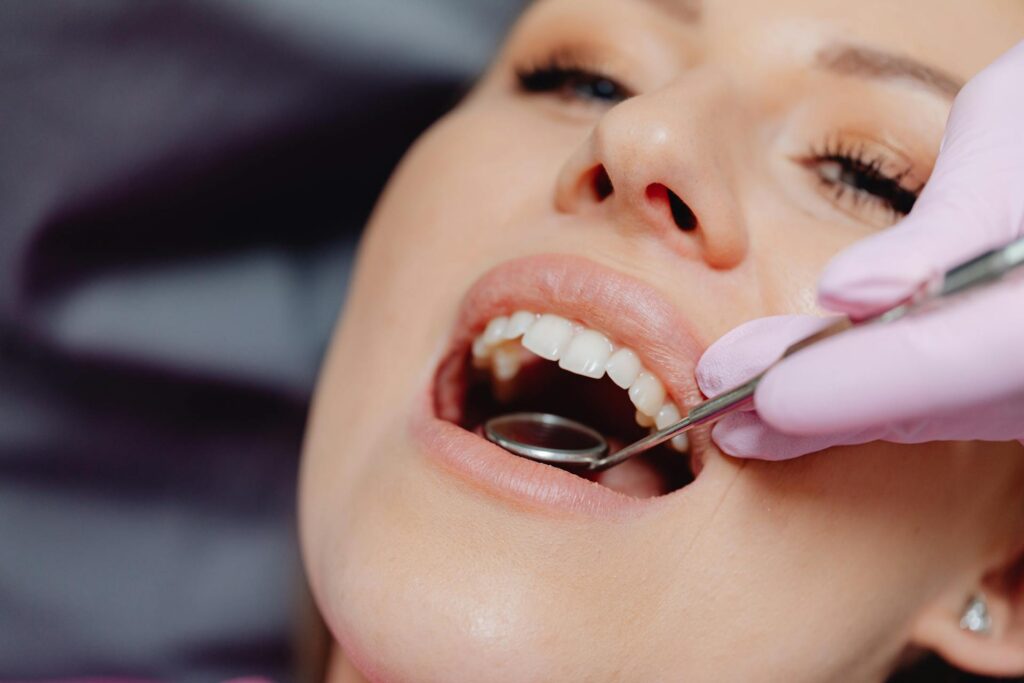
Your dentist checks for decay with a mirror, explorer, and X rays. You may not feel pain yet. Early decay often feels like nothing. Treatment now protects both health and appearance.
2. Gum health and gum shape
Your gums frame every tooth. Swollen, red, or receding gums change the look of your smile. They also affect how crowns, veneers, or bonding sit at the gum line.
Your dentist will
- Measure pockets around teeth
- Check for bleeding when gently probing
- Look at gum recession and exposed roots
Research from the National Institute of Dental and Craniofacial Research shows that untreated gum disease raises the risk of tooth loss and bone loss. Healthy gums help cosmetic work look even and stay firm.
3. Bite alignment and tooth wear
Your bite decides how your upper and lower teeth touch when you close and chew. If your bite is off, certain teeth take more force. This leads to
- Flattened edges
- Small fractures
- Chips on front teeth
- Loose or shifting teeth
Any cosmetic work on those teeth will face the same stress. Your dentist watches how your teeth come together, checks jaw movement, and looks for wear that shows clenching or grinding.
4. Enamel quality and staining
Enamel thickness and quality change how well whitening works and how bonding or veneers attach. Deep stains from trauma or some medicines may not respond to surface whitening. Uneven enamel can lead to patchy color after treatment.
Your dentist judges
- Natural tooth shade
- Type of stains on each tooth
- Enamel cracks or thin spots
This helps set real expectations so you do not feel misled.
How early detection protects cosmetic results
Early dental findings often look small. A faint line, a mild chip, a little bleeding during brushing. Each one can grow into a future problem for cosmetic work. The table below compares common issues when found early versus late.
| Issue | Detected early | Detected late | Impact on cosmetic results |
|---|---|---|---|
| Tooth decay | Small filling | Root canal or extraction | Simple color match versus crown or implant |
| Gum disease | Cleaning and home care changes | Bone loss and possible tooth loss | Even gum line versus gaps and black spaces |
| Teeth grinding | Night guard and bite adjustments | Broken teeth and jaw pain | Stable veneers versus repeated repairs |
| Crooked bite | Minor orthodontic work | Wear and fractures on front teeth | Smooth smile line versus chipped edges |
| Thin enamel | Gentle whitening and fluoride | Sensitivity and dark teeth | Even color versus patchy or dull look |
You lower cost and stress when you treat problems at the early stage. You also protect any cosmetic work you choose later.
Family focused benefits of general dentistry
General visits help each person in your home for different reasons. Children, teens, adults, and older adults all face issues that affect appearance and function.
- Children. Early checks guide jaw growth, spacing, and habits like thumb sucking
- Teens. Exams track wisdom teeth, sports injuries, and braces results
- Adults. Visits watch for grinding, stress, gum disease, and wear from daily life
- Older adults. Checks focus on dry mouth, medications, and past dental work
The Centers for Disease Control and Prevention explains how untreated cavities are common in children and adults. That decay affects both health and appearance.
Questions to ask your dentist about cosmetic outcomes
You guide your care when you ask clear questions. During your next checkup, consider asking
- Are there any issues that could limit how long whitening or veneers last
- Do you see signs of grinding that could chip cosmetic work
- Is my gum line stable or do you see signs of gum disease
- Would you fix any decay or old fillings before cosmetic treatment
- How do my X rays look in terms of bone support for future work
These questions show that you care about both health and appearance. They also help your dentist plan in a way that respects your goals and your budget.
How to prepare for a cosmetic focused checkup
You can get more value from your visit with simple steps.
- List what you like and dislike about your smile
- Bring details about medicines and health conditions
- Share any jaw pain, headaches, or grinding sounds
- Ask for photos or models if you need help picturing changes
Clear communication turns a routine check into a strong base for any future cosmetic plan.
Take the next step
You deserve a smile that feels clean, steady, and real. General dentistry is not only about fixing problems. It is also about guarding the future look of your teeth. When you keep regular visits and ask direct questions, you give your dentist the chance to spot trouble early and protect every cosmetic choice you make later.
Your next checkup is the right time to start that talk. Bring your concerns, listen to the findings, and build a plan that keeps your mouth healthy and your smile proud.
Want to know about How General Dentistry Strengthens The Foundation For Cosmetic Enhancements Check out our Health category.