


Losing a family member because of another party’s conduct can leave you facing legal and financial questions at the same time. A wrongful death lawyer can investigate responsibility, explain your state’s rules, estimate recoverable losses, and deal with insurers or defendants. Choosing counsel carefully matters because these cases can involve strict filing rules and detailed evidence.
Short answer: Hire an attorney who regularly handles fatal-injury cases, can explain your state’s filing rules, has the resources to investigate complex evidence, and provides a written fee agreement. Compare at least two qualified lawyers before signing, and avoid anyone who guarantees a specific result or settlement amount.
| What to check | What you should know |
| Type of case | A civil claim involving a death allegedly caused by negligence, recklessness, or another wrongful act |
| Who may file | State law controls eligibility, which may involve relatives, dependents, or an estate representative |
| Attorney fees | Contingency arrangements are common, but percentages and case expenses differ |
| Filing deadline | The applicable state law and the facts of the case determine the deadline |
| Evidence | Records, witness information, photos, reports, financial documents, and expert analysis may matter |
| First consultation | Ask about relevant experience, trial work, fees, staffing, communication, and case strategy |
This article provides general U.S. information. It is not a substitute for advice from a licensed attorney who has reviewed the facts of your case.
What a wrongful death lawyer actually does

A wrongful death action is generally a civil lawsuit against a person or entity that may be legally responsible for someone’s death. Liability may arise from negligent, reckless, or intentional conduct.
An attorney’s work usually starts with the facts. Counsel may collect accident reports, medical records, photographs, video footage, witness statements, employment information, and other relevant material.
The lawyer then considers who may be legally responsible. Depending on the event, that could include an individual, business, property owner, health care provider, manufacturer, or another party.
Counsel may also:
- identify the people legally permitted to bring the claim;
- preserve evidence before records or physical materials disappear;
- communicate with insurers and defense attorneys;
- calculate financial and nonfinancial losses allowed by state law;
- hire appropriate experts when technical questions arise;
- negotiate a settlement; and
- prepare the case for court if negotiations fail.
A civil case is separate from a criminal prosecution. Civil liability may still be possible even when the same event leads to criminal proceedings or when no criminal conviction occurs. Civil and criminal cases also use different burdens of proof.
Who can bring a claim?
There is no single nationwide rule that determines who may sue.
State statutes establish the applicable framework. Depending on the jurisdiction, certain family members, dependents, estate representatives, or other qualifying parties may be permitted to pursue a claim.
In some jurisdictions, the personal representative of the estate must file the claim. Other states give certain relatives a direct right to sue.
That difference is one reason location matters. An article describing the rule in California, Florida, Texas, or Virginia should not be treated as a nationwide answer.
Ask counsel two direct questions during your first meeting:
- Who has legal standing to file this case in my state?
- Who may receive compensation if the case succeeds?
These questions can prevent confusion when several relatives or an estate are involved.
How much does hiring an attorney cost?
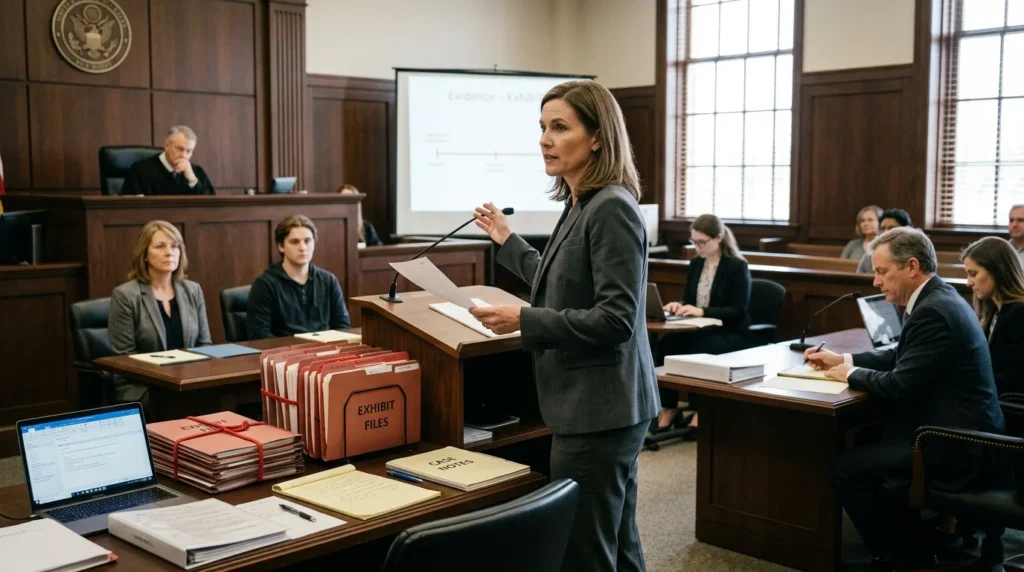
Many lawyers who handle claims for monetary damages use contingency fees. Under this arrangement, the attorney receives an agreed percentage of a successful recovery rather than charging the client for each hour worked.
Contingency percentages vary by lawyer, jurisdiction, and case. The actual fee should be clearly stated in the representation agreement, and applicable law may limit fees in certain situations.
The attorney’s percentage is not the only cost to consider. Cases can involve expenses for court filings, obtaining records, depositions, investigators, expert witnesses, exhibits, and other litigation-related work. Ask whether these expenses are deducted from the recovery before or after the attorney’s percentage is calculated.
A contingency fee agreement should clearly explain the applicable percentage and how litigation expenses will be handled.
Before signing, ask:
- What percentage will the firm receive?
- Does the percentage change if a lawsuit or trial becomes necessary?
- Who advances case expenses?
- Are expenses deducted before or after the legal fee?
- Could I owe case expenses if there is no recovery?
- Will I receive a written breakdown when the case ends?
Read the agreement carefully rather than relying on an advertisement that says “no fee unless you win.”
7 questions to ask before hiring counsel
A consultation should help you assess the lawyer just as much as it helps the lawyer assess your case.
Smagazinego’s existing guide on questions to ask a car accident lawyer before hiring covers similar concerns about experience, fees, communication, and trial preparation. Those same topics deserve extra attention when a death is involved.
1. How many similar cases have you handled?
General personal injury experience is useful, but fatal cases can raise different questions about beneficiaries, estates, damages, and evidence.
Ask for examples involving similar causes of death. Look for relevant experience rather than impressive totals from unrelated cases.
2. Who will handle my case day to day?
The lawyer you meet may not be the person who manages every part of the file. Ask which attorney will have primary responsibility. Find out how paralegals, junior lawyers, investigators, and outside experts may participate.
3. What are the strengths and weaknesses of my claim?
A thoughtful answer should address both.
Be cautious if an attorney promises a specific result before reviewing the evidence. Litigation involves uncertainty, and no lawyer can control every witness, insurer, judge, or jury.
4. What is your fee arrangement?
Ask for the percentage and expense policy in writing. A wrongful death lawyer should be able to explain the agreement in plain language before asking you to sign it.
5. What evidence should we preserve now?
Evidence can become harder to obtain as time passes. Depending on the event, relevant material may include photographs, surveillance footage, vehicle data, workplace records, medical records, product evidence, messages, or witness contact information.
Online activity may also affect litigation. Smagazinego’s article on how social media can impact a car accident case explains why public posts deserve careful attention once a legal dispute develops.
6. Are you prepared to take the case to trial?
A case may settle without going to trial, but the attorney should still be prepared for litigation. Ask about courtroom experience in comparable matters. You should also know who would serve as trial counsel if the case reached that stage.
7. How will you communicate with my family?
Set expectations before signing an agreement. Ask how often the firm provides updates, who answers routine questions, and how quickly clients typically receive responses. Clear communication can be especially important during a case that lasts several months or longer.
Don’t overlook the filing deadline
Every state has rules controlling when civil claims must be filed. The applicable deadline can depend on both the jurisdiction and the specific facts of the case.
That means a generic online deadline should not replace state-specific legal advice.
The safer question is: What exact filing deadline applies to this case, and why?
Ask the attorney to identify the controlling rule and applicable date. Waiting can also make evidence harder to preserve, even when the formal filing deadline has not yet arrived. If the death occurred recently, early legal review can help determine which records, physical evidence, electronic data, and witnesses may require prompt attention.
What compensation may be available?
Recoverable damages depend on state law and the facts of the case. Possible categories may include financial losses connected with the death and, where state law permits, losses related to companionship, guidance, or other personal relationships.
An attorney may examine matters such as:
- funeral and burial expenses;
- qualifying medical expenses;
- lost financial contributions;
- lost household services;
- loss of companionship or guidance, where allowed; and
- other damages authorized by applicable law.
Avoid calculators that promise a precise case value based on only a few online questions. The value of a claim can depend on the evidence, governing law, available insurance or assets, disputed liability, and the losses a claimant can legally prove.
Red flags when choosing a law firm

Strong advertising does not automatically mean strong representation.
Be cautious when a lawyer or firm:
- guarantees a settlement amount;
- pressures you to sign immediately;
- refuses to explain fees and expenses in writing;
- avoids questions about similar cases;
- cannot tell you who will manage the file;
- gives vague answers about trial experience; or
- discourages you from reading the representation agreement.
You can also check whether the lawyer is licensed and whether public disciplinary information is available through the relevant state bar or licensing authority.
For more general legal reading, Smagazinego maintains a Law section with additional guides.
What to bring to the first consultation
You do not need a perfectly organized case file before speaking with counsel. Bring whatever reliable information you already have. Useful materials may include the death certificate, police or incident reports, insurance correspondence, medical records, photographs, bills, employment information, and witness details.
Create a short timeline as well. List the event, medical treatment, death, communications with insurers, and any deadlines or notices you have received.
Do not delay a consultation solely because some documents are missing. The attorney can tell you which records matter and how they may be obtained.
Frequently asked questions
Many attorneys use a contingency arrangement, meaning the legal fee comes from a successful recovery. The exact percentage varies by lawyer, jurisdiction, and case. Your written agreement and applicable state rules determine the amount.
No. A dispute may be resolved through negotiation, but litigation may become necessary when liability or compensation remains contested. Ask prospective counsel about both settlement and trial experiences.
There is no reliable nationwide deadline that applies to every case. State statutes and specific circumstances control the filing period. Ask an attorney licensed in the relevant jurisdiction to identify the exact deadline.
Potentially, yes. Civil and criminal proceedings are separate. A civil claim may sometimes proceed even when criminal charges are not filed or do not result in a conviction.
Yes, you can. Comparing two or three consultations can help you evaluate experience, communication, staffing, fee terms, and proposed strategy before signing an agreement.
Take the next step carefully
The goal is not to hire the firm with the biggest advertisement. It is to find qualified counsel who understands the applicable state law, can investigate the evidence, explains costs clearly, and communicates in a way your family can trust.
Schedule consultations with two or three attorneys licensed in the relevant state. Bring the documents you have, ask the seven questions above, and request a written fee agreement before deciding who will represent the claim.