

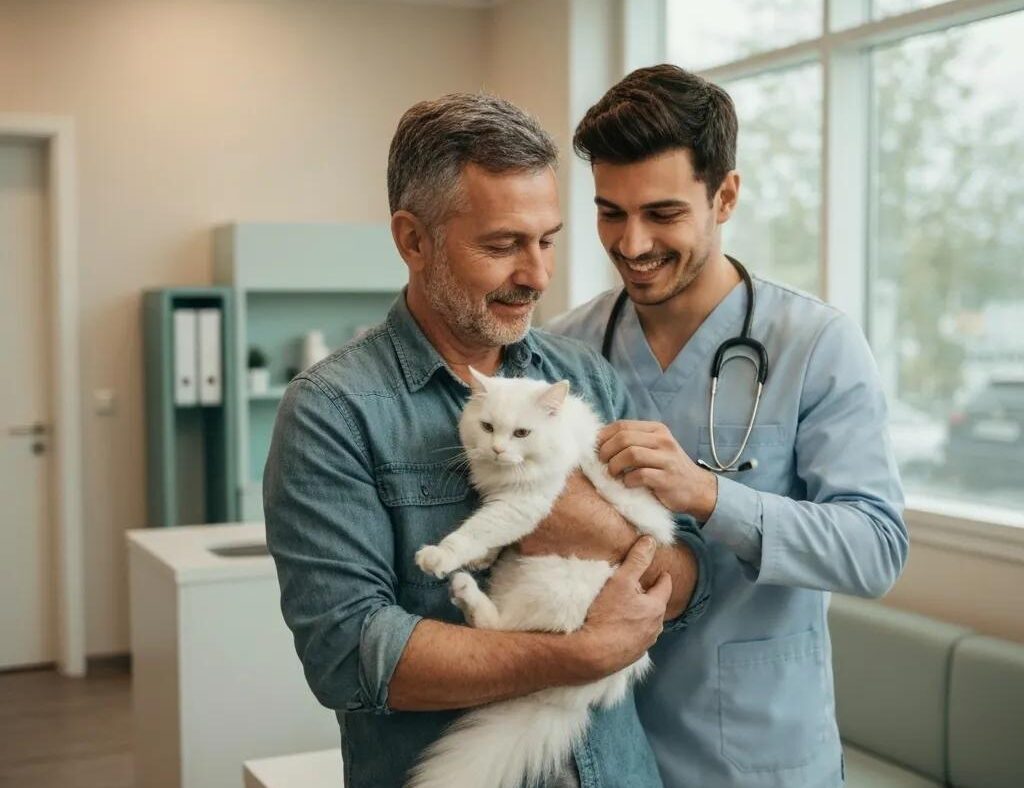
You might be reading this after a long night at an emergency clinic or after another confusing appointment where you left with more questions than answers. You remember the moment your pet started limping, stopped eating, or seemed “off,” and from that second on, your mind has been racing. You worry about the diagnosis, the cost, and whether you are making the right decisions for a family member who cannot speak for themselves, and you wish you had an experienced veterinary team in Richmond to guide you through every step.end
In the middle of all that stress, what often hurts most is not knowing. Not knowing what the veterinarian is really thinking. Not knowing what each test is for. Not knowing what the options are, or whether “watch and wait” is actually safe. That is why transparent communication at animal hospitals matters so deeply. Clear, honest, two way conversations give you something solid to stand on when everything else feels shaky.
You want care that is medically sound, but you also want a team that talks to you like a partner, answers your questions without rushing, and respects your limits. The good news is that you can look for specific signs that a hospital values openness, and you can ask the kind of questions that bring clarity instead of confusion.
Why does clear communication with your vet matter so much when you are scared?
When your pet is sick or hurt, you are not just dealing with a medical problem. You are dealing with fear, guilt, and sometimes financial pressure. It is common to think “Did I miss something earlier” or “If I say I cannot afford that test, will they think I do not care about my pet.” These feelings can make it very hard to think clearly during appointments.
Because of this tension, you might leave a visit and realize you did not fully understand the diagnosis or the treatment plan. Research on veterinary communication shows that misunderstandings are common, and that they can affect how well pets are cared for at home. For example, studies of pet owners and veterinarians have found that when information is not explained in plain language, owners may not follow medication instructions correctly or might miss early warning signs of trouble. One study on infection prevention in animal care settings highlighted how much owner education and clear explanation matter for protecting both pets and people, especially around issues like zoonotic diseases, where germs can pass between animals and humans. You can see an example of that focus on communication in public health guidance in this CDC resource on veterinary settings and infection control.
When communication is open and honest, something important happens. You feel safer saying “I do not understand” or “That cost is too high for me right now.” Your veterinarian gets a clearer picture of your situation and can suggest options that actually fit your life. That partnership is what helps you make decisions you can live with, even when the news is hard.
What does “transparent communication” at an animal hospital really look like?
Transparency is more than being “nice” or friendly. It is about the hospital sharing information in a way that is timely, clear, and complete, so you are not left guessing. You might be wondering what that looks like in day to day care.
Consider a common situation. Your dog suddenly cannot put weight on a back leg. At Hospital A, the veterinarian briefly examines your dog, says “We need X rays,” and hands you a printed estimate. You feel rushed. You do not know if there are other options or what the vet is really worried about. You approve the test mostly because you are afraid to say no.
At Hospital B, the veterinarian examines your dog and then sits down with you. They explain what they found, the most likely causes, and what they hope to learn from X rays. They outline other options, such as a short trial of pain medication and rest, and they talk openly about the pros and cons of each path. They ask what you are most concerned about and whether cost is a factor. The medical situation is the same. The difference is the level of clear veterinary communication.
There is research to back up how powerful this can be. Studies have shown that when pet owners feel fully informed, they report higher trust in their veterinarians and are more likely to follow treatment plans. One paper that explored veterinarian client relationships found that honest, two way communication helps prevent conflict and improves satisfaction for both sides. You can see an example of this type of research in this study on communication and trust in veterinary medicine.
In practical terms, transparent animal care communication usually includes things like:
• Explaining diagnoses in words you can repeat at home.
• Outlining all reasonable options, including “do nothing for now” when that is safe.
• Being upfront about costs before procedures or tests.
• Admitting uncertainty when answers are not clear yet.
• Welcoming questions, second opinions, and your own observations about your pet.
When these pieces are missing, you may feel pushed, judged, or left in the dark. When they are present, you feel respected and better able to protect your pet.
How can you compare animal hospitals on communication, not just convenience?
Choosing an animal hospital often starts with location, hours, or online reviews. Those things matter, but they do not tell you how the team will talk to you when your pet needs help. So how can you compare a hospital that truly values open communication in veterinary care with one that treats you more like a number.
The table below offers some simple comparison points you can use when you call, visit a website, or have your first appointment.
| Communication Area | Hospital that values transparency | Hospital with limited transparency |
|---|---|---|
| Explaining diagnoses | Uses clear, everyday language and checks your understanding with questions like “Does that make sense” | Uses medical jargon and moves on quickly without asking what you heard or remember |
| Treatment options | Offers multiple options when possible, explains pros and cons, includes “watchful waiting” when appropriate | Presents a single plan as the only choice, gives little room to discuss alternatives |
| Cost discussions | Provides written estimates before procedures, explains what is urgent versus optional, invites budget questions | Talks about cost only at checkout or when you ask, leaves you surprised by the final bill |
| Follow up and accessibility | Encourages follow up questions by phone or email, explains when to worry and when to wait | Gives minimal discharge instructions, expects you to “figure it out” at home |
| Respect for your role | Treats you as the expert on your pet’s behavior, invites your input, and acknowledges your feelings | Dismisses your concerns, interrupts you, or makes you feel blamed for your pet’s condition |
Reading this, you might notice that you have experienced both sides at different times. That alone can be clarifying. It shows that your discomfort in some settings was not you being “too sensitive.” It was a real response to how information was or was not shared.
What can you do right now to get clearer communication for your pet?
You cannot control every interaction in an animal hospital, but you do have more influence than you might think. Small changes in how you prepare and what you ask can shift the tone of a visit and help you get the information you need.
1. Prepare your questions and your story before the appointment
When you are worried, it is easy to forget details in the exam room. Before you go, write a short timeline of what you have noticed. Include when symptoms started, changes in eating, drinking, bathroom habits, energy level, and anything new in your pet’s environment. Then list the top three questions you want answered, such as “What are the most likely causes,” “What are my options today,” or “What signs mean I should go to emergency care.”
Having this in front of you helps you stay focused, and it signals to the veterinarian that you want and expect clear answers.
2. Ask for plain language and repeat back what you heard
If something is not clear, say so directly. You might use phrases like “Can you explain that in simpler terms” or “What does that mean for my pet today and over the next few weeks.” After the veterinarian explains the plan, try summarizing it back. For example, “So I will give this medication twice a day with food, watch for vomiting or diarrhea, and call if he is not better in three days. Is that right.” This simple step often catches misunderstandings before you leave.
A hospital that truly values transparent animal hospital communication will welcome this and stay with you until you feel comfortable.
3. Set boundaries around cost and ask for prioritized options
Money can be hard to talk about, especially when you worry it might sound like you care less. In reality, honest cost conversations are part of good medical care. You can say “I want the best care I can afford. My budget today is around [your number]. Can you help me prioritize what is most important.” A thoughtful veterinarian can often structure care in stages, starting with the most critical tests or treatments and planning follow up as needed.
This kind of transparent conversation about cost and care protects both you and your pet. It reduces surprise bills and helps you stick with the plan you choose.
Holding on to confidence and compassion as you move forward
Caring for a sick or injured pet is emotionally heavy. It is normal to feel overwhelmed, second guess yourself, or replay past decisions in your mind. Even with the best care, outcomes are not always what you hope for, and that can be painful.
What you can control is the kind of partnership you insist on with your animal hospital. You deserve a team that speaks plainly, listens carefully, and respects your role as your pet’s advocate. When you have that kind of relationship, you can face hard news with a little more steadiness, because you know you are making informed, thoughtful choices, not rushed or pressured ones.
As you choose where to go next, pay attention not just to medical services, but to how the staff talks with you from the first phone call. The way they communicate is not a small detail. It is part of the care your pet receives and part of the care you receive as well.
Apart from that, if you want to know about 4 Steps General Veterinarians Take Before Surgery then please visit our Pets category.