

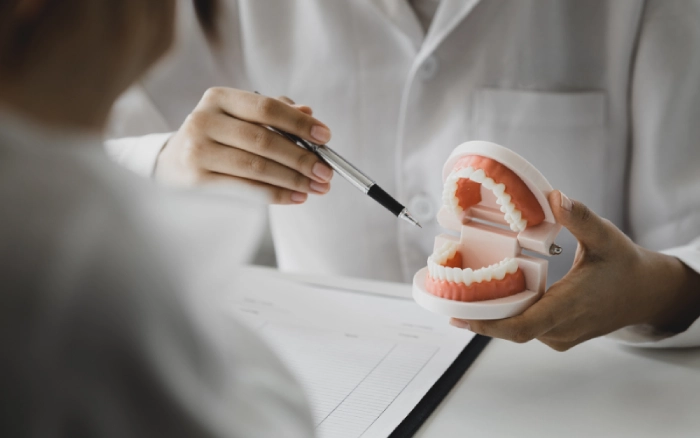
Dental implants need strong bone support. Without it, the implant can loosen, hurt, or fail. Your jawbone acts like the foundation of a house. If that base is thin, soft, or uneven, the whole structure is at risk. Many people think implants are like simple tooth replacements. They are not. The implant must fuse with your bone and stay steady through years of chewing and daily use. That fusion only happens when the bone is thick and healthy. This is why dentists study your jaw with scans, measurements, and medical history. They look for hidden bone loss, past infections, or long missing teeth. Each of these can weaken the jaw. Lower Manhattan dental implants depend on this same strong base. When bone is weak, you still have options. You may need bone grafting, careful planning, or a different implant design.
Why bone strength matters for implants
A dental implant is a small post that sits in your jaw. Your bone holds it in place. You then receive a crown on top. The crown is the part you see and use for biting.
Strong bone support matters for three main reasons.
- The implant must stay still while it heals.
- The bone must grow tightly around the implant.
- The implant must handle daily chewing forces.
If the bone is thin or weak, it can crack or shrink. Then the implant can move. Movement during healing raises the chance of failure. The National Institute of Dental and Craniofacial Research explains that bone loss often follows tooth loss. You can read more about this process at NIDCR tooth loss information.
What happens to bone after tooth loss
After you lose a tooth, the jawbone in that spot starts to shrink. The body sees no more chewing force in that place. So it stops keeping the bone strong there.
Over time, you may notice three changes.
- Your gums look flatter or sunken.
- Your face shape changes around your mouth.
- Your dentures or partials feel loose.
The American College of Prosthodontists notes that most adults lose some jaw height and width after tooth loss. That loss can limit implant choices. You can find more details at the ACP page on dental implants.
Signs your bone may be too weak for an implant right away
You cannot see your jawbone. Yet some clues suggest it may not be strong enough yet for an implant.
- The tooth has been missing for many years.
- You wear a loose denture in that spot.
- You had a past gum infection or abscess there.
- You have untreated gum disease.
- You have a history of osteoporosis.
The dentist confirms bone strength with X-rays or a 3D scan. The scan shows bone height, width, and quality. It also shows nerves and sinus spaces that affect implant placement.
How strong bone protects your implant
When bone is thick and dense, it protects your implant in three key ways.
- It spreads chewing force across a wide base.
- It holds the implant steady during healing.
- It reduces the risk of cracks or fractures in the jaw.
This support lowers the chance of pain, infection, or early failure. It also helps your crown feel like a natural tooth when you talk and eat.
Implants compared with traditional tooth replacements
Strong bone support sets implants apart from other tooth options. The table below compares common choices.
| Tooth option | Needs strong jaw bone | Effect on jaw bone over time | Support source |
|---|---|---|---|
| Single dental implant | Yes | Helps maintain bone where placed | Jaw bone under the implant |
| Implant bridge | Yes | Helps maintain bone under implant posts | Jaw bone under each implant |
| Removable partial denture | No | Does not stop bone loss under missing teeth | Gums and nearby teeth |
| Full removable denture | No | Bone often keeps shrinking under denture | Gums and palate |
| Fixed bridge on natural teeth | No | Bone loss continues under the missing tooth gap | Filed neighboring teeth |
This comparison shows why bone matters so much for implants. The same feature that protects bone also demands that the bone be strong at the start.
How dentists strengthen weak bone
Weak bone does not always block you from getting an implant. It means more planning.
Common steps include three paths.
- Bone grafting. The dentist adds bone material to thin spots. Over time, your body replaces it with your own bone.
- Sinus lift. In the upper back jaw, the dentist gently raises the sinus floor. Then they place bone material under it. This creates more height for implants.
- Different implant designs. In some cases, shorter or narrower implants fit limited bone.
Each step adds healing time. Yet it can turn a high-risk case into a stable one.
Your role in keeping bone strong before and after implants
You have real control over your bone health. Simple daily habits protect both teeth and jaw.
- Brush twice a day with fluoride toothpaste.
- Clean between teeth every day.
- Do not smoke or vape.
- Limit sugary drinks and snacks.
- Keep regular checkups and cleanings.
- Tell your dentist about osteoporosis or related medicines.
After you receive an implant, good care prevents infection around the implant. Infection can cause bone loss and loosening. Clean the implant area as carefully as you clean natural teeth.
When to ask about bone support and implants
Talk with a dentist if you have any of these concerns.
- A missing tooth you want to replace.
- A loose denture that rubs your gums.
- Worry about bone loss in your jaw.
Ask three direct questions.
- Is my bone strong enough for an implant now?
- If not, what can we do to strengthen it?
- What are my risks if I wait longer?
Clear answers help you plan. Strong bone support is not a small detail. It is the hidden base that lets an implant feel steady and safe for many years.
Apart from that, if you want to know more about The Importance Of Whole Body Health In Dental Treatment Planning then visit our Health category.