

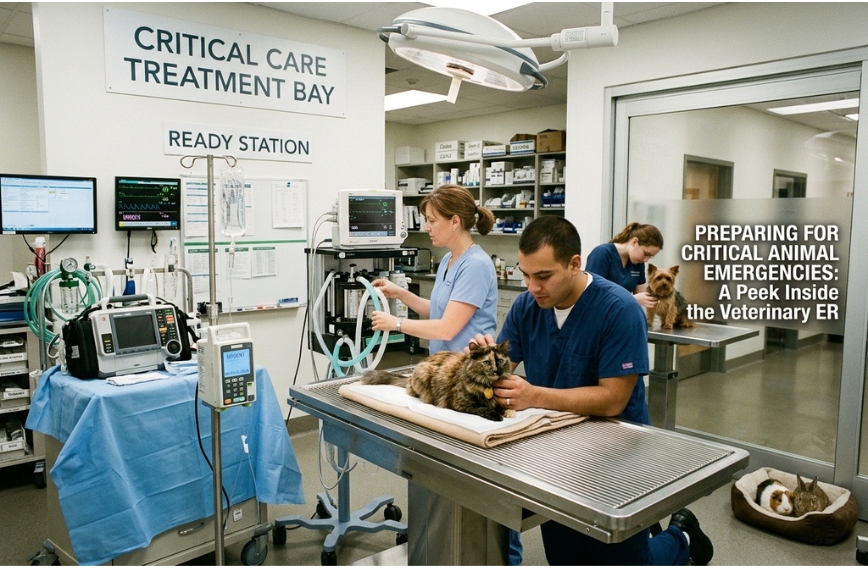
You do not plan for a pet emergency. One minute your dog is struggling to breathe or your cat will not stand up, and the next you are driving with your heart in your throat, trying to stay calm long enough to get there. In that moment, you want to know one thing. When you arrive for veterinary care in Gulf Shores, will the hospital be ready?
The short answer is yes. When an animal hospital is expecting a critical patient, the treatment area is prepared before your pet comes through the door. Staff clear space, gather oxygen and monitoring equipment, review the reported symptoms, and assign roles so there is no wasted motion. That kind of preparation matters because the first few minutes often shape what happens next.
Emergency veterinary teams prepare before your pet arrives
Critical cases rarely enter a room that is being set up on the fly. If you call ahead, the team can start preparing the treatment area based on what you tell them. Trouble breathing, collapse, hit by car, active seizure, toxin exposure, and severe bleeding all trigger a different setup. Oxygen support may be turned on before arrival. IV supplies may be opened and labeled. Warming tools, suction, crash drugs, blood draw tubes, ultrasound, or a ventilator-ready station may be placed within reach.
This is one reason hospitals ask for a brief description of the problem when you are on the way. A strong emergency service does not wait for perfect information. It uses the clues it has and builds a working plan. North Carolina State University describes this process in its emergency service overview, where emergency teams are structured to assess and stabilize patients as quickly as possible.
You may not see most of this. From the lobby, it can feel like your pet disappeared behind a door. That can be hard. It can also mean the staff is doing exactly what should happen. Triage comes first. Paperwork comes later when a case is unstable.
Treatment area setup changes with the type of emergency
Preparation is not one standard checklist for every patient. A dog in shock needs rapid vascular access, fluid planning, blood pressure monitoring, and often imaging support. A cat in respiratory distress needs a low-stress oxygen space first, because too much handling can make breathing worse. A pet with trauma may need pain control, oxygen, imaging, blood products, and a team ready to move fast if internal bleeding is suspected.
This is where preparing veterinary treatment rooms for emergencies becomes both medical and logistical. The room itself has to work. Surfaces are cleaned and cleared. Lighting is adjusted. Monitors are placed where staff can see them without crowding the patient. Emergency drugs are checked for dose accuracy. Restraint plans are chosen carefully so the team protects the pet without causing more stress or injury.
Hospitals with intensive care capability prepare for what happens after the first crisis too. If a patient needs ongoing support, the next step may involve transfer to an ICU area with continuous monitoring, oxygen delivery, infusion pumps, and round the clock nursing care. NC State’s small animal ICU information shows how these units support patients who need close observation after emergency stabilization.
Fast preparation reduces delays and lowers avoidable risk
In critical care, delay has a cost. If a pet arrives and the team still needs to find catheters, set up oxygen, assign staff, or clear a table, time is lost. That does not mean every second decides the outcome, but it does mean readiness improves the odds of smooth, safe care.
You may also be worried about cost, and that concern is real. Emergency care can become expensive quickly because the hospital is not only treating the problem. It is also using trained staff, advanced monitoring, immediate lab work, imaging, medications, and intensive nursing time. Preparation itself is part of that system. You are paying for a team that can move without hesitation when your pet is unstable.
The University of Tennessee’s after-hours emergency guide gives a clear picture of what clients can expect during urgent visits, including triage, wait times, and the way critical patients are prioritized.
Prepared emergency treatment areas work differently from standard exam rooms
| Feature | Standard Exam Room | Critical Care Treatment Area |
|---|---|---|
| Main purpose | Routine exams, history, basic treatment | Immediate stabilization and active monitoring |
| Equipment on hand | Basic tools, scale, exam table | Oxygen, suction, IV access supplies, monitors, emergency drugs |
| Staff involvement | Usually one doctor and one assistant or technician | Coordinated team with doctor, technicians, and support staff |
| Patient handling | Planned, lower urgency workflow | Rapid triage with handling adjusted to breathing, pain, and stability |
| Decision timeline | Minutes to longer discussion | Seconds to minutes for life-saving steps |
This is the practical difference behind how animal hospitals prepare treatment areas for urgent arrivals. The goal is not to create a perfect room. The goal is to remove friction so care starts the moment your pet needs it.
What you can do before and during an emergency visit
Call while you are on the way. Give the hospital your pet’s species, age, main symptoms, and how long the problem has been happening. Say if your pet is having trouble breathing, bleeding, seizing, collapsing, or may have eaten something toxic. That short call helps the team prepare the right space and equipment.
Bring key information, not a long story. Medications, toxin packaging, recent records, and a short timeline are more useful than trying to remember every detail under stress. If another clinic has already seen your pet, ask them to send records ahead if possible.
Expect triage to come before conversation. If your pet is unstable, staff may move quickly and speak briefly at first. That can feel abrupt when you are scared. It usually means the team is focused on stabilization, which is exactly what you want from an emergency animal hospital.
Prepared teams make hard moments more manageable
You cannot make a pet emergency easy, and you cannot control every outcome. You can choose a hospital that knows how to prepare for critical cases and call ahead so the team is ready when you arrive. That preparation is one of the quiet things that protects your pet when time is tight. If your pet is in distress, contact an emergency animal hospital now and let them know you are coming.