

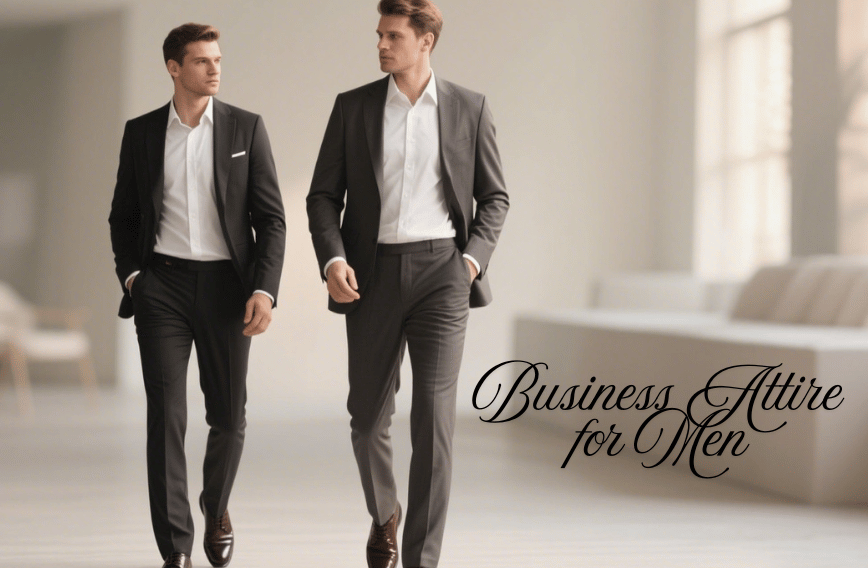
Business attire for men falls into four main levels: business formal, business professional, business casual, and smart casual. The right choice depends on your industry, the occasion, and your company’s dress code, but the rules stay consistent: clothes that fit well, neutral colors, clean shoes, and tidy grooming. When in doubt, dress one level above what you expect others to wear.
What you wear at work shapes first impressions before you say a word. A well-fitted outfit signals attention to detail and respect for the people you meet, while a wrinkled shirt or scuffed shoes can undercut even a strong presentation. This guide explains each dress code, the wardrobe pieces that cover nearly every situation, how expectations shift by industry, and the mistakes that most often hold men back.
The Four Levels of Business Attire for Men at a Glance
| Dress code | Key elements | When to wear |
|---|---|---|
| Business formal | Dark suit, white or light shirt, conservative tie, black oxfords, minimal accessories | Job interviews in corporate fields, board meetings, formal conferences, evening business events |
| Business professional | Suit in gray, navy or a subtle pattern, white/blue/pastel dress shirt, classic tie, polished leather shoes | Everyday office wear in law, finance and consulting, client presentations |
| Business casual | Chinos or dress slacks, button-down or knit polo, optional blazer, loafers or brogues, no tie | Most modern offices, internal meetings, networking events |
| Smart casual | Dark jeans or chinos, unstructured blazer, knitwear or polo, clean leather sneakers or loafers | Casual Fridays, start-ups, creative agencies, after-work events |
Think of these as a ladder. Each step down removes a layer of formality, usually the tie first, then the matching suit, then the dress shoes, while keeping the outfit clean, fitted and deliberate.

Why Business Attire Still Matters
Dress codes have relaxed in many workplaces, but clothing still sends signals. Here is why it deserves attention:
- First impressions form quickly. People size each other up within moments of meeting. A neat, appropriate outfit lets your skills do the talking instead of distracting from them.
- It shows you understand the culture. Matching the formality of the room shows you have done your homework, whether that room is a law firm or a design studio.
- It supports confidence. Clothes that fit and suit the occasion remove one thing to worry about before a big meeting or presentation.
- It helps with advancement. Consistently looking put-together makes it easier for managers and clients to picture you in senior, client-facing roles.
Business Attire Categories Explained

1. Business Formal
Business formal is the most traditional level and is suitable for boardrooms, senior-level meetings and conservative industries. Fit matters more here than anywhere else, so it is worth understanding the difference between off-the-rack and tailored suits before you buy.
- Dark, tailored two-piece suit in navy or charcoal (black is better saved for evening events)
- Crisp white or pale blue dress shirt
- Silk tie in a solid color or small, quiet pattern
- Black leather oxfords, polished
- Matching black belt, simple watch, optional tie bar or cufflinks
- Dark dress socks long enough that no skin shows when you sit
Wear it for: interviews at banks, law firms and large corporations; meetings with executives or boards; formal conferences and award dinners.
2. Business Professional
Business professional is a half-step less strict and is the daily standard in many finance, legal and consulting offices. It leaves more room for color and texture while keeping the suit-and-tie structure.
- Solid or subtly patterned suit (pinstripe, chalk stripe, or fine check) in gray, navy or muted tones
- Dress shirts in white, blue, pale pink, or fine stripes
- Ties with modest patterns such as stripes, dots or small repeating motifs
- Oxfords, derbies, or smart leather loafers in black or dark brown
- Belt that matches your shoes
Wear it for: daily office work in traditional industries, client presentations, semi-formal networking events.
3. Business Casual
Business casual is now the most common office dress code. It drops the tie and often the jacket, but it is not the same as weekend wear. The safest approach is to build it around trousers with a crease or clean chinos and a collared shirt.
- Dress slacks, tailored wool trousers, or chinos in navy, gray, khaki or olive
- Button-down Oxford cloth shirts, poplin shirts, or knit polos in solid colors
- Optional navy blazer or sport coat for meetings
- Leather loafers, brogues, monk straps, or suede desert boots
- Leather belt and a clean, simple watch
Wear it for: relaxed office environments, internal meetings, team events and most networking functions.
4. Smart Casual
Smart casual is the most relaxed level that still reads as professional. It shows up in start-ups, tech firms and creative agencies, and on casual Fridays.
- Dark, well-fitted jeans with no rips or fading, or chinos
- Unstructured blazer, sport jacket, or overshirt
- Fine-gauge knitwear, quality polos, or a crisp T-shirt under a blazer in very relaxed settings
- Clean white leather sneakers, loafers, or chelsea boots
- Room for personal touches such as patterned socks or a textured watch strap
Wear it for: casual Fridays, after-work gatherings, start-up and creative workplaces.
How to Decode a Dress Code You Are Unsure About
Invitations and job postings rarely spell out exactly what to wear. Use this short process:
- Look at the company’s own photos. Team pages, LinkedIn photos and event pictures show what people actually wear.
- Ask directly. A recruiter or event organizer will not mind a quick question about dress code, and it shows care.
- Go one level up. If the office is business casual, wear a blazer to the interview. It is easy to remove a jacket or tie; you cannot add one you left at home.
- Adjust after day one. Once you see the room, settle into the norm for your team and role.
Essential Pieces of a Men’s Business Wardrobe

You do not need a huge closet to dress well for work. A small set of versatile, well-fitted pieces covers nearly every situation, and most of them work across several dress codes.
| Piece | Suggested quantity | Why it earns its place |
|---|---|---|
| Suits (navy, charcoal, mid-gray) | 2–3 | Navy and charcoal handle formal days; trousers and jackets can be worn separately for business casual |
| Dress shirts (white, light blue, subtle stripe) | 5–7 | Enough for a full work week without constant laundry |
| Navy blazer or sport coat | 1–2 | Turns chinos and a button-down into meeting-ready business casual |
| Chinos and wool trousers | 3–4 pairs | The backbone of business casual in neutral shades |
| Ties (solid navy, burgundy, simple stripe) | 3–5 | Cover formal and professional occasions without looking loud |
| Shoes (black oxfords, brown loafers or derbies) | 2–3 pairs | Black for formal, brown for everything else |
| Belts (black and brown leather) | 2 | One to match each shoe color |
| Knitwear (merino crewneck or quarter-zip) | 2 | Layers over shirts for smart casual and cooler offices |
Spend most of your budget on what gets the most wear and what shows fit most clearly: suits, shoes and the blazer. Then budget for a tailor. Small adjustments, such as hemming trousers, shortening sleeves, or taking in a shirt at the waist, often make a mid-priced garment look better than an expensive one that does not fit.
Fit checklist before you buy
- Jacket shoulder seams end where your shoulders end, with no divots or overhang.
- Jacket sleeves show about a quarter to half an inch of shirt cuff.
- The jacket buttons without the fabric pulling into an X shape.
- Shirt collar lets you slide one or two fingers in when buttoned.
- Trousers sit at the waist without a belt holding them up and break lightly or not at all over the shoe.
Grooming and Presentation Tips
Business attire extends beyond clothing. Grooming is often what people notice first in close conversation or on video calls.
- Keep your haircut regular and suited to your workplace.
- Keep facial hair neatly trimmed with clean lines, or stay clean-shaven.
- Use fragrance sparingly; one or two sprays is plenty for an office.
- Polish shoes regularly and use cedar shoe trees to hold their shape.
- Iron or steam shirts and trousers, and keep a lint roller at your desk.
- Keep nails short and clean; hands are on show during handshakes and presentations.
Dressing According to Your Industry

Expectations vary a lot between industries, and dressing appropriately means reading your field as well as your office.
| Industry | Typical standard | Practical tip |
|---|---|---|
| Law, finance, banking, government | Business formal or professional | Keep colors conservative and invest in excellent tailoring |
| Consulting and sales | Business professional, adapted to the client | Match or slightly exceed the formality of the client you are visiting |
| Technology and start-ups | Business casual or smart casual | Quality basics and good fit matter more than formality |
| Media, design, advertising | Smart casual | More room for color, texture and personal style, kept neat |
| Healthcare and education (non-clinical) | Business casual | Comfortable, practical pieces that still look polished |
Modern Trends in Men’s Business Attire
Workplace style continues to balance tradition with comfort. These trends are worth knowing, as long as they suit your office:
- Tailored but not tight. Slim-fit suits remain popular, but there is a shift toward slightly roomier, more comfortable cuts.
- Separates over full suits. Blazers paired with contrasting trousers or chinos give more outfits from fewer pieces.
- Performance and natural fabrics. Stretch wool, breathable cotton and linen blends make commuting and long days easier.
- Minimal accessories. Clean watches, plain leather belts and simple bags.
- Video-call dressing. Crisp collared shirts and knitwear that look sharp on camera, especially for hybrid and remote work.
Common Mistakes to Avoid
| Mistake | Why it is a problem | Fix |
|---|---|---|
| Oversized or ill-fitting suits | Look sloppy and undermine credibility | Buy for the shoulders, then tailor the rest |
| Loud ties or flashy accessories | Pull attention away from you and your message | Choose one point of interest per outfit |
| Neglected shoes | Scuffs ruin an otherwise polished look | Polish weekly and rotate pairs |
| Strong cologne | Can be unpleasant in shared spaces | Apply lightly to skin, not clothing |
| Underdressing for the occasion | Signals a lack of respect for the event | Dress one level above when unsure |
| Mismatched belt and shoes | Looks careless in formal settings | Match leather colors in formal and professional outfits |
Bottom Line on Business Attire for Men
Business attire for men is a flexible system rather than a rigid rulebook. Learn the four dress codes, build a compact wardrobe in neutral colors, get the fit right with a tailor, and keep grooming consistent. If you start with two good suits, a navy blazer, a handful of shirts and two pairs of well-kept shoes, you will be ready for nearly any professional setting.
Want more style inspiration? Read Burberry Spring Women’s Dress: Exploring the Latest Style or browse our Fashion category.
Frequently Asked Questions
Do men have to wear a suit for business attire?
Not always. A suit is expected for business formal and business professional settings such as interviews in finance or law, but many offices are business casual, where chinos, a collared shirt and an optional blazer are enough. Check the company culture and dress one level up when unsure.
What is the difference between business casual and smart casual?
Business casual usually means dress trousers or chinos with a collared shirt and leather shoes. Smart casual is more relaxed and can include dark jeans, knitwear, and clean leather sneakers, while still looking neat and deliberate.
Are polo shirts acceptable business attire for men?
A plain, well-fitted polo is acceptable in many business casual and smart casual offices, especially in warm weather. Avoid large logos and athletic fabrics, and choose a button-down shirt instead for client meetings or more formal workplaces.
What should a man wear to a job interview?
For corporate roles, a navy or charcoal suit, white or light blue shirt, simple tie and polished shoes is the safe choice. For start-ups and creative roles, a blazer with chinos and a collared shirt usually works, but it is still better to be slightly overdressed.
What colors are best for men’s business attire?
Navy, charcoal and mid-gray are the most versatile suit colors, with white and light blue shirts. Brown and black leather shoes cover nearly every occasion, with black reserved for the most formal settings.
What does not count as business attire?
Athletic wear, graphic T-shirts, ripped or faded jeans, shorts, flip-flops, and visibly wrinkled or stained clothing fall outside business dress codes. Even in relaxed offices, clothing should look clean, fitted and intentional.