


Introduction:
Welcome to The Ultimate Guide to Acid Stained Concrete Floors: Design Ideas, Pros & Cons. If you’re searching for a flooring solution that combines durability, style, and individuality, acid-stained concrete floors are an exceptional choice. This comprehensive guide will walk you through everything you need, from the fascinating process behind acid staining to creative design inspirations, practical maintenance tips, and a balanced look at the advantages and drawbacks.
Whether you’re a homeowner seeking a modern upgrade or a designer exploring unique finishes, this guide will empower you to make informed decisions about acid-stained concrete floors for any space.
The Unique Visual Appeal of Acid Staining
| Field/Topic | Information |
|---|---|
| Definition | Acid-stained concrete floors are created by applying an acidic solution that reacts with the minerals in concrete. |
| Staining Steps | The process includes cleaning the surface, checking moisture, applying the stain, neutralizing, and sealing. |
| Design Flexibility | Allows for a wide range of patterns, borders, and custom artistic effects. |
| Visual Impact | Produces unique, marbled, and multi-toned finishes that are never exactly the same. |
| Available Colors | Typically found in earthy tones like browns, reds, greens, and blues. |
| Color Mixing | Different stains can be blended, but results are often unpredictable and unique. |
| Strength and Durability | Highly resistant to wear and can last for many years with proper care. |
| Upkeep Requirements | Simple maintenance involving regular cleaning and occasional resealing. |
| Cost Benefits | More affordable than many traditional flooring options, especially when using existing slabs. |
| Suitable Locations | Perfect for homes, offices, retail spaces, patios, and driveways. |
| Longevity | With proper maintenance, these floors can last for decades. |
| Cleaning Advice | Use mild detergent and water; avoid harsh chemicals and abrasive tools. |
| Wax Application | Applying wax can enhance protection and should be done as needed. |
| Resealing Frequency | Reseal every few years to maintain the floor’s appearance and durability. |
| Spill Response | Clean up spills quickly to prevent permanent stains or discoloration. |
| Safety Precautions | Sealed floors may be slippery when wet; non-slip additives can improve safety. |
Understanding Acid Stained Concrete Floors
Acid-stained concrete floors are made by treating a concrete surface with a specially designed acidic solution. This solution chemically reacts with the minerals in the concrete, resulting in rich, translucent colors and distinctive marbled patterns. Unlike paint or coatings, the color becomes a permanent part of the floor, offering a unique and durable finish popular in residential and commercial settings.
Step-by-Step: The Acid Staining Process
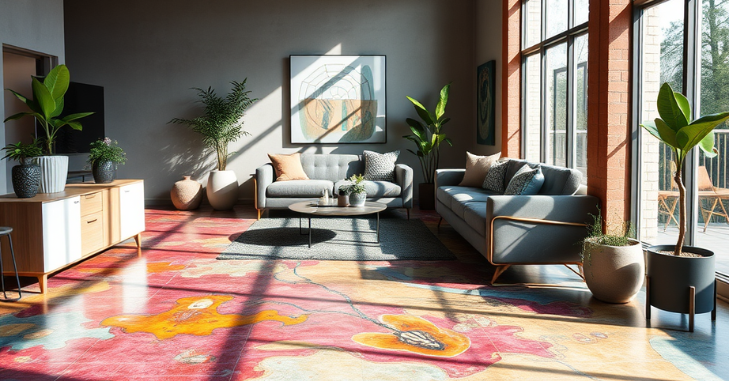
1. Surface Preparation
The first step is to ensure the concrete is clean, unsealed, and free of adhesives or coatings. Any cracks or imperfections should be fixed, as the stain will highlight these flaws rather than hide them.
2. Moisture Check
Too much moisture can prevent the acid from reacting appropriately, leading to uneven coloring.
3. Applying the Stain
The acid stain is sprayed or brushed onto the concrete. As it reacts with the minerals, it produces a unique, variegated color pattern. Each floor develops its character, making every project one-of-a-kind.
4. Neutralizing the Surface
Once the desired color is achieved, the acid residue must be neutralized with a solution such as baking soda and water and then thoroughly cleaned.
5. Sealing the Floor
A protective sealer enhances the color, adds shine, and guards against moisture and stains. As a final step, a floor wax can be added for extra protection.
Creative Design Ideas for Acid-Stained Concrete Floors
1. Natural Marbling and Veining
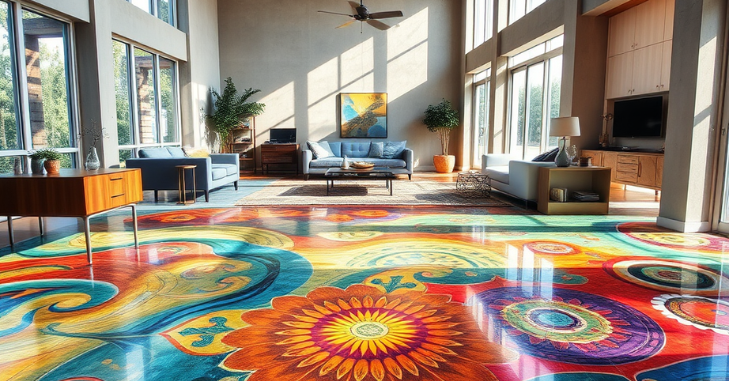
Acid stains naturally create marbled effects, but you can intensify this by layering multiple colors. For example, blending black with lighter shades can mimic marble or leather, adding depth and luxury.
2. Warm, Earthy Tones
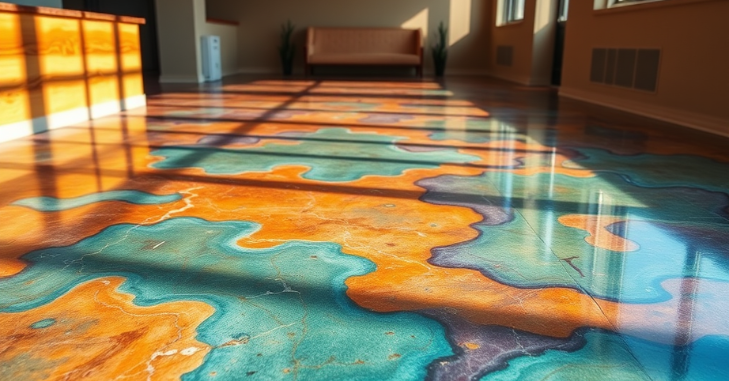
Most acid stains come in earthy colors like browns, reds, greens, and blues. These shades work beautifully in rustic, industrial, or farmhouse-inspired interiors. Combining colors like Coffee Brown and English Red can create a warm, inviting atmosphere.
3. Sleek, Modern Looks
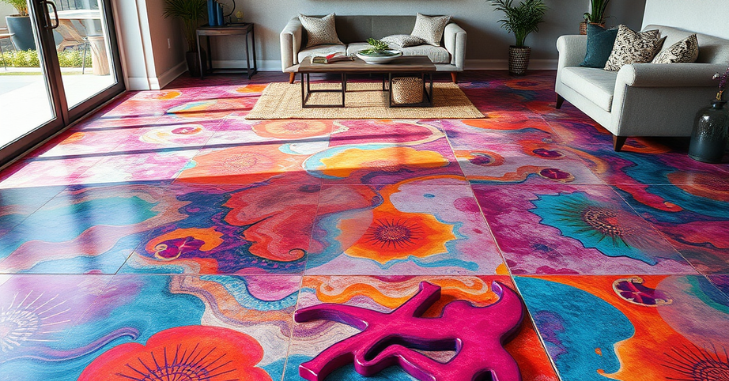
Dark stains like charcoal or black are perfect for modern or industrial spaces. These colors pair well with minimalist décor and metallic accents, giving the space a contemporary edge.
4. Custom Color Blends
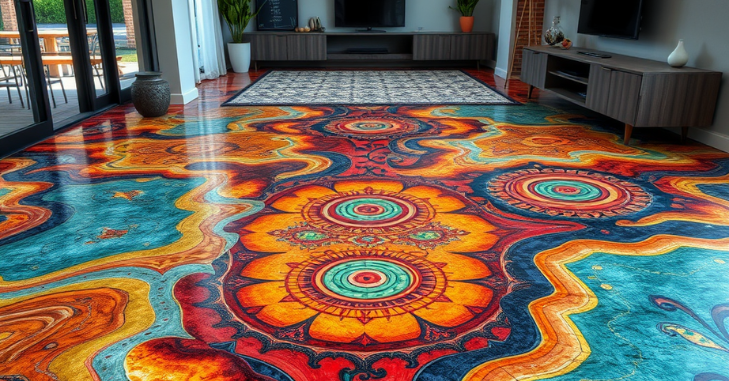
Experiment with different stain colors to create custom effects. You can blend colors seamlessly, use contrasting shades to define different zones, or create decorative borders.
5. Outdoor and High-Traffic Areas
Acid-stained concrete works well outdoors on patios, walkways, and pool decks. Adding non-slip additives or textured finishes can increase safety in wet or busy areas.
Advantages of Acid Stained Concrete Floors
- Unmatched Uniqueness: Every acid-stained floor is unique, featuring organic patterns and colors that can’t be replicated. This makes them ideal for anyone seeking a one-of-a-kind look.
- Exceptional Durability: Because the stain becomes part of the concrete, it won’t chip, peel, or fade easily.
- Easy Maintenance: Routine cleaning is a simple sweep and mop with mild soap and water. Occasional resealing and waxing will keep the floor looking fresh.
- Budget-Friendly: Acid staining is often more affordable than installing tile, hardwood, or stone, especially if working with an existing concrete slab.
Disadvantages of Acid Stained Concrete Floors
- Limited Color Options: Acid stains are typically available in natural, earthy tones. If you want bright or bold colors, consider exploring concrete dyes instead.
- Unpredictable Results: The final look depends on the concrete’s composition, age, and condition. While this unpredictability creates unique beauty, it may not suit those who want a uniform appearance.
- Potential Slipperiness: Sealed floors can be slippery, especially when wet. Using non-slip additives or textured finishes can help prevent slips and falls.
- Vulnerability to Stains and Scratches: While durable, acid-stained floors aren’t immune to staining or scratching if improperly sealed. Regular maintenance is necessary to protect the finish.
Tips for Maintaining Acid Stained Concrete Floors
- Regular Cleaning: Sweep or vacuum often to remove dirt and debris. Mop with a gentle, pH-neutral cleaner and avoid harsh chemicals that could damage the sealer.
- Resealing and Waxing: Apply a fresh coat of sealer every few years, and wax high-traffic areas as needed to maintain shine and protection.
- Refinishing When Needed: If the finish becomes dull or worn, lightly sand the surface and reapply the sealer to restore its original beauty.
Popular Color Choices and Combinations
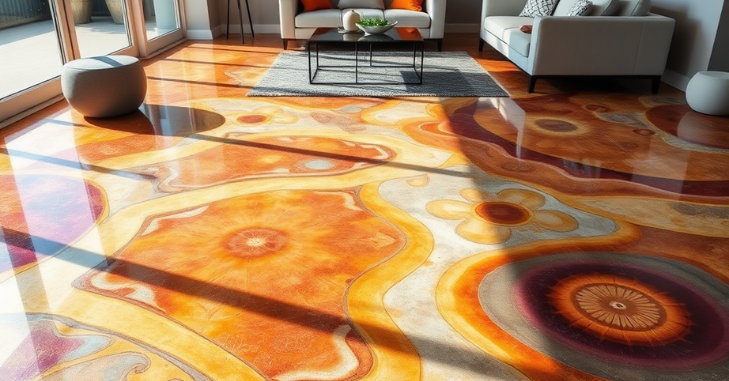
- Azure Blue: A versatile, vibrant shade that works well as an accent or primary color, especially in modern spaces.
- Black: Ideal for dramatic, high-contrast designs or as a base for marbled effects.
- Coffee Brown, English Red, Green: Classic choices that suit rustic or traditional décor.
- Custom Mixes: Layering or blending colors can produce stunning, personalized results. However, each floor will be unique due to the chemical reaction.
Comparing Acid Stained Concrete to Other Flooring Options
| Feature | Acid Stained Concrete | Tile | Hardwood | Painted Concrete |
| Durability | High | High | Moderate | Moderate |
| Maintenance | Low | Moderate | High | High |
| Installation Cost | Low | Moderate | High | Low |
| Pattern/Color Variety | Unique, Marbled | Uniform | Natural | Uniform |
| Lifespan | Decades | Decades | 10–20 yrs | 5–10 yrs |
Conclusion:
Acid-stained concrete floors offer a rare blend of beauty, strength, and uniqueness that few other flooring options can match. Their ability to transform plain concrete into a work of art makes them ideal for homes and commercial environments. While there are considerations such as color limitations and surface preparation, the benefits-long-lasting durability, low maintenance, and one-of-a-kind aesthetics-often outweigh the drawbacks.
By learning about the process, considering innovative design options, and evaluating the advantages and drawbacks, you can make an informed choice on whether acid-stained concrete floors are the ideal solution to enhance your flooring project.
Apart from that, if you are interested to know about “Choosing the Right Roofing Contractor: A Comprehensive Guide” then visit our “Home Improvement” category
Frequently Asked Questions (FAQs)
Concrete acid stains can be removed using a diluted muriatic acid solution or a neutralizing cleaner. Scrubbing thoroughly and rinsing properly helps restore the surface safely.
To clean acid-stained concrete floors, use a neutralizing cleaner and scrub with a stiff brush.Thoroughly rinse the surface and let it dry completely to ensure the best outcome.
Acid-stained concrete is a decorative flooring technique where acid-based stains react with minerals in the concrete to create unique, permanent colors. This process enhances surfaces with rich, variegated tones that won’t peel or fade.