
Your family’s teeth tell a quiet story about health, habits, and stress. A routine checkup can protect that health. It can also leave you confused if you do not know what to ask. Many parents rush through visits and leave with unanswered questions. Then small problems grow into painful emergencies. You deserve clear answers. Your children do too. When you sit down with your gentle family dentist in Acton, MA, you should feel ready to speak up. You can use a short list of questions to guide that talk. These questions help you understand risk, treatment choices, and daily care at home. They also show your dentist what matters most to you. That respect goes both ways. With the right questions, a simple visit turns into a strong plan. You walk out confident. Your family walks out safer.
Why your questions matter
Quiet patients often leave with silent fear. You may nod during an exam and agree to treatment. Yet later you sit at home and feel doubt. That strain affects your choices. It can even lead you to delay needed care.
Clear questions do three things. They protect your health. They protect your money. They protect your peace of mind.
You do not need dental training. You only need a short script. Use these four questions at every visit. Write them on your phone. Hand the list to your child so they can ask with you. That simple step shows your dentist that you expect honest answers.
Question 1: “What do you see today that worries you?”
Start with this direct question. It invites your dentist to speak plainly about risk. It also keeps the talk focused on today, not on a long list of future services.
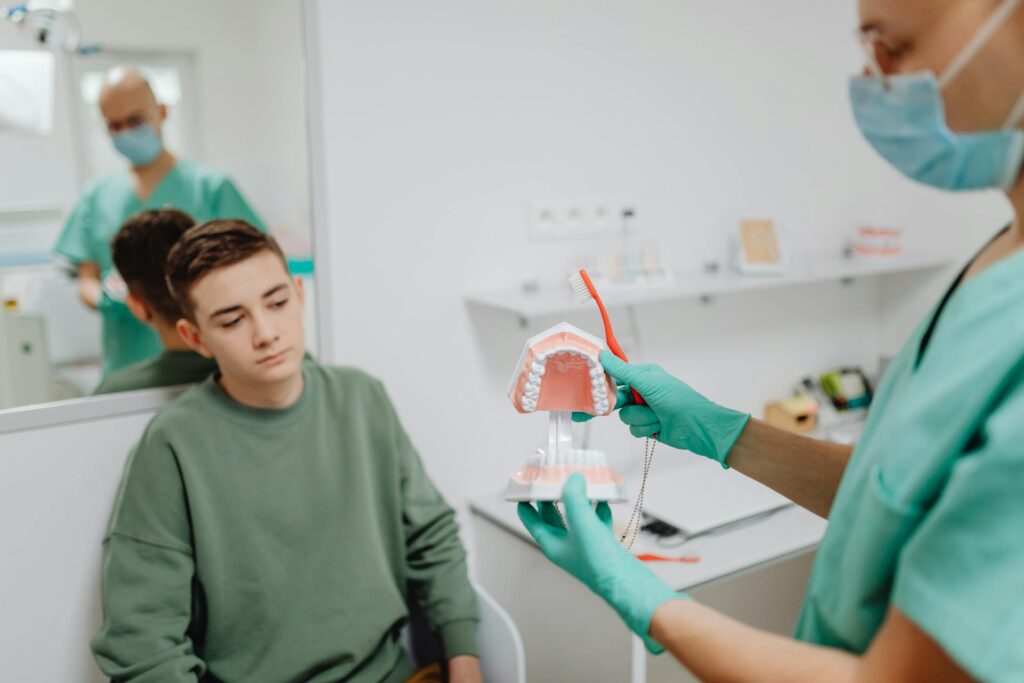
Ask your dentist to point to each concern in a mirror or on images. You can request simple words. For example, “soft spot” instead of a long tooth name.
Then ask three follow up questions.
- What happens if we do nothing right now
- How fast can this get worse
- What signs at home should make me call you
This keeps you from feeling rushed into care that can safely wait. It also keeps you from ignoring a problem that needs quick treatment.
You can review basic tooth decay facts from the Centers for Disease Control and Prevention. Bring any questions from that page to your visit.
Question 2: “What is my child’s cavity and gum risk over the next year?”
Many parents only hear “no cavities today.” That sounds safe. Yet risk often hides between visits. Diet, brushing, and flossing shape that risk. So do past cavities.
Ask your dentist to rate risk as low, medium, or high. Then ask what pushes your child into that group. You can write the answers in three short lists.
- Habits that raise risk, such as sipping juice, soda, or sports drinks
- Habits that lower risk, such as brushing twice a day with fluoride paste
- Habits your family can change this week
You can also ask about fluoride in your local water. Many towns use community water fluoridation to prevent cavities. The practice is safe and effective, as explained by the CDC Community Water Fluoridation resource.
Question 3: “Can you walk me through every treatment option, including waiting?”
Treatment choices can feel confusing. You may hear several terms at once. You may feel pressure to choose quickly. That pressure can cause regret.
Ask your dentist to lay out all options in plain words. Include the choice to wait and watch. For each option, ask three things.
- What is the goal
- What are the risks and possible pain
- What will home care look like after the visit
You can request a simple comparison like the one below. Use it as a model during your visit.
| Treatment choice | When used | Pros | Limits |
|---|---|---|---|
| Watch and wait | Very small spot that may stay stable | No drilling. No shot. Low cost. | Needs close checkups. Spot can grow. |
| Small filling | Cavity in one part of the tooth | Stops decay. Restores chewing. | Removes some healthy tooth. May need repair. |
| Crown | Large break or deep decay | Strong cover. Protects weak teeth. | Higher cost. Longer visit. |
This type of table keeps the talk clear. It gives you space to think. It also helps older children take part in choices about their own teeth.
Question 4: “What should our daily home routine look like until the next visit?”
Most dental work fails when home care slips. You spend money on treatment. Then weak habits undo the work. That loss can feel crushing.
Ask your dentist to design a routine that fits your family. You can frame it as a simple day.
- Morning. How long should each person brush? What toothpaste should each person use.
- Afternoon. What drinks and snacks are safer between meals?
- Night. Who needs floss? Who needs help from an adult? Who needs a mouthguard?
Then ask what to change during sickness, sports seasons, braces, or pregnancy. Life shifts. Your routine should shift with it.
Simple numbers that show why these questions matter
Tooth decay is common and painful. It also affects school and work. The numbers below show the weight on families.
| Group | Measure | Impact |
|---|---|---|
| Children 5 to 11 years | About 1 in 5 have untreated cavities | Missed school days. Trouble eating. |
| Adolescents 12 to 19 years | About 1 in 7 have untreated cavities | Pain. Sleep problems. Low focus. |
| Adults 20 to 64 years | Over 1 in 4 have untreated cavities | Missed work. Higher medical costs. |
These numbers come from national surveys that track oral health in the United States. They show that quiet problems are common. Your questions pull those problems into the open.
How to prepare before you sit in the chair
You can make each visit calmer with three steps.
- Write your four key questions and keep them in your phone or wallet.
- List any tooth pain, bleeding, or broken teeth you noticed since the last visit.
- Bring a short record of new medicines or health changes for each family member.
Share the questions with your child before the visit. Let them choose one question to ask. That builds trust and courage. It also teaches that speaking up in a medical office is normal and safe.
Turn a routine visit into a strong plan
Every checkup is a chance to reset your family’s health. Quiet worry does nothing. Clear questions change the whole visit. You do not need perfect teeth. You only need honest talk and a simple plan you can follow at home.
Use these four questions at your next appointment. Ask for clear words. Ask for pictures. Ask for time to think. Your dentist should welcome that. Your family deserves that care.
Apart from that, if you want to know more about How Implant Dentistry Enhances Both Aesthetics And Function then visit our Health category.