

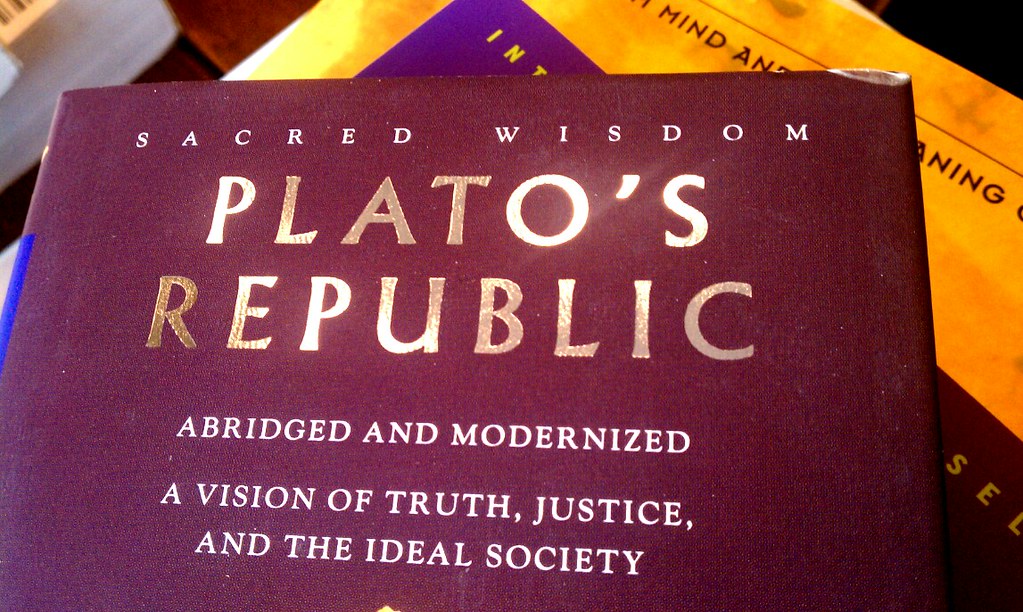
Plato’s Republic remains one of the most influential texts in philosophy and political thought. Written around 380 BCE, it explores justice, the ideal state, and the nature of human behavior. This masterpiece is still studied extensively, offering timeless insights into human governance and societal structures.
Plato’s Vision of Justice and the Ideal State
Plato’s Republic seeks to define justice both in individuals and within society. Justice, according to Plato, involves each part of society performing its designated role effectively. He introduces the concept of a tripartite society: rulers, auxiliaries, and producers.
Rulers are philosopher-kings, chosen for their wisdom and ability to prioritize the common good. Auxiliaries support rulers by maintaining order and enforcing laws, while producers focus on economic activities. This division of roles ensures harmony, mirroring the three parts of the soul: reason, spirit, and appetite.
The Philosopher-King: A Controversial Concept
One of the most debated ideas in the Republic is Plato’s concept of the philosopher-king. Plato argues that philosophers, guided by reason and truth, are best suited to govern. He believed that their pursuit of knowledge equips them to make decisions for the collective good.
Critics argue this ideal is impractical because it assumes philosophers are immune to corruption. However, the concept underscores the need for informed and morally grounded leadership. This idea continues to inspire debates about leadership qualities in modern political systems.
Plato’s Allegory of the Cave: Knowledge and Enlightenment
The Republic presents the Allegory of the Cave, a metaphor for human ignorance and enlightenment. In the allegory, prisoners in a cave perceive shadows as reality because they cannot see beyond their confined environment. The journey out of the cave represents the philosopher’s path toward understanding ultimate truths.
This allegory highlights the importance of education and critical thinking in achieving enlightenment. It resonates today, especially in discussions about misinformation and the need for informed citizens in democratic societies.
Critiques of Democracy in the Republic
Plato’s skepticism about democracy stems from his belief in the dangers of uninformed rule. He criticizes democracy as a system where power often falls into the hands of those unfit to govern. According to Plato, excessive freedom can lead to chaos, eventually giving rise to tyranny.
Modern thinkers often engage with this critique, questioning whether democracies can safeguard against populism and demagoguery. Plato’s concerns remain relevant in examining the balance between freedom and responsible governance.
The Republic’s Influence on Political Theory
The Republic has profoundly shaped Western political philosophy, influencing thinkers like Augustine, Rousseau, and Marx. Augustine used Plato’s ideas to explore the concept of divine justice in The City of God. Rousseau’s The Social Contract reflects the idea of the general will, echoing Plato’s vision of collective harmony.
Karl Marx critiqued Plato’s class divisions, drawing parallels between his tripartite society and modern economic systems. Plato’s emphasis on structured governance and justice continues to inspire diverse ideological frameworks.
Modern Applications of Plato’s Ideas
Plato’s Republic remains relevant in addressing contemporary political and ethical dilemmas. His focus on justice influences debates about social equality and the distribution of resources. For those interested in diving deeper into these ideas, a Plato online course can provide structured insights into his vision of the ideal state and human behavior.
Additionally, the Allegory of the Cave serves as a reminder of the dangers of ignorance. In an age of information overload, Plato’s call for education and enlightenment resonates strongly.
Challenges in Interpreting the Republic
Critics of Plato’s Republic often point to its authoritarian undertones. His rigid class structure and emphasis on collective over individual rights raise questions about personal freedom. Modern liberal thinkers argue that his ideal state sacrifices too much for the sake of harmony.
However, defenders see the Republic as a thought experiment rather than a practical blueprint. By engaging with its ideas critically, readers can extract valuable lessons without accepting its authoritarian implications.
Conclusion
Plato’s Republic remains a cornerstone of philosophical inquiry and political theory. Its exploration of justice, governance, and human nature continues to inspire debate and analysis. By addressing fundamental questions about society, Plato offers insights that remain relevant in our pursuit of a just and harmonious world.
Modern readers and scholars can draw on Plato’s ideas to address pressing challenges, from leadership crisis to the need for informed citizenship. The Republic is a testament to the enduring power of philosophy in shaping human thought and society.
Apart from that if you want to know about The Future of Educational Leadership then please visit our Education Category.