

How to Repair Stucco
Stucco is a classic and durable exterior finish that gives homes a beautiful, timeless look while providing excellent protection against the elements. However, even the toughest materials can show signs of wear over time. Cracks, holes, and water damage can appear due to weather exposure, foundation movement, or simple aging.
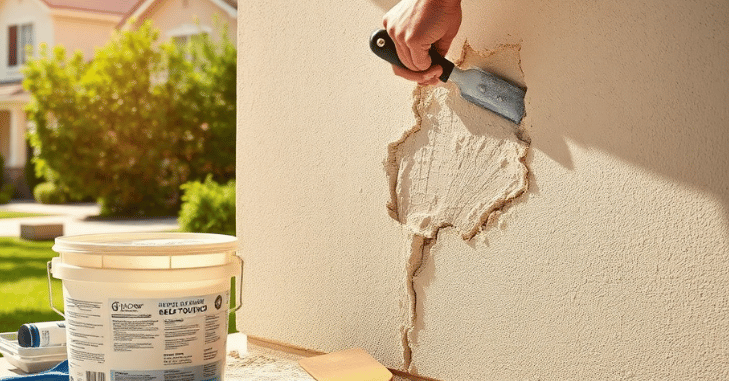
Learning how to repair stucco is essential for maintaining your home’s structure, appearance, and value. This guide walks you through everything you need to know, from identifying different types of stucco damage to step-by-step repair methods and preventive maintenance tips.
| Section | Overview |
| Introduction | Why stucco repair matters for strength and appearance. |
| Causes of Damage | Moisture, foundation shifts, poor installation, weather, or impact. |
| Types of Damage | Hairline, medium, and large cracks; holes, stains, and bulging walls. |
| Hairline Crack Repair | Clean, caulk, smooth, and repaint small surface cracks. |
| Medium/Large Crack Repair | Widen the crack, patch with stucco mix, match the texture, and paint. |
| Hole Repair | Remove damaged stucco, fix lath, apply new layers, and blend. |
| Water Damage Repair | Cut out affected areas, fix the moisture source, reapply stucco, and seal. |
| Texture & Color Matching | Use proper tools and pigments for a seamless finish. |
| Preventive Maintenance | Inspect often, manage drainage, repaint, and seal joints. |
| Repair Costs | $100–$10,000+, depending on size and severity. |
| Conclusion | Learning how to repair stucco keeps your home durable and beautiful. |
Why Stucco Gets Damaged
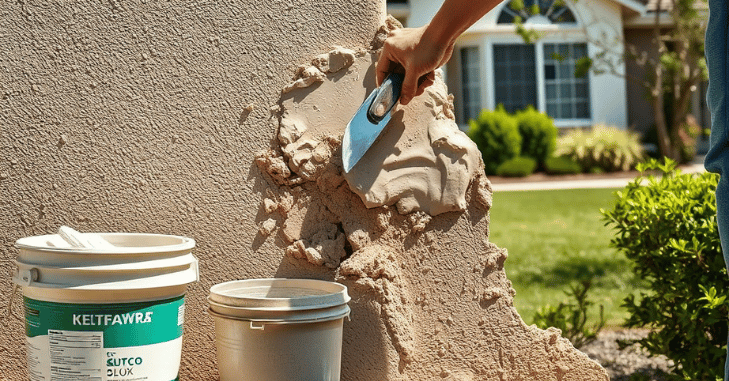
Before learning how to repair stucco cracks or holes, it’s important to understand what causes the damage in the first place.
Moisture Intrusion
- Poor sealing or damaged flashing allows water to penetrate behind the stucco.
- Over time, this leads to bubbling, discoloration, or soft spots.
Foundation Movement
- As a house settles, even small shifts can create stress that causes cracking.
- Vertical and diagonal cracks usually point to structural movement.
Improper Installation
- Incorrect mix ratios or skipping expansion joints cause premature cracking.
- Applying stucco too thinly reduces durability.
Weather Exposure
- Extreme heat, cold, or humidity can weaken stucco surfaces.
- Freeze-thaw cycles lead to flaking or crumbling.
Physical Impact
- Accidental hits from tools, ladders, or lawn equipment can create holes.
Types of Stucco Damage
Hairline Cracks (Less than 1/16 inch)
Hairline cracks are the most common type of stucco damage and are usually cosmetic. They occur due to normal settling, drying, or minor temperature fluctuations. These cracks are shallow and don’t affect the structural integrity of your wall.
Medium Cracks (1/16 to 1/8 inch)
Medium cracks appear when the wall experiences slight structural movement or thermal expansion. While they may look minor, they can allow water to seep through if left untreated.
Large Cracks (Over 1/8 inch)
Large cracks are a sign of more serious issues such as foundation shifts, water damage, or structural stress. They often run deep and may continue to expand over time. Before repairing large cracks, it’s important to have a professional inspect your stucco to identify any underlying structural problems.
Holes and Chips
Holes and chips in stucco are typically caused by physical impact, such as from tools, ladders, or hail. While they may seem small, they can expose the layers beneath the stucco to moisture, leading to further damage.
Stains and Discoloration
Stains or discoloration on stucco usually result from moisture infiltration, mold growth, or rusting metal lath beneath the surface. Light stains can often be cleaned or painted over with breathable exterior paint.
Bulging or Bubbling Stucco
Bulging or bubbling stucco is one of the most serious signs of water damage. It means moisture has become trapped behind the stucco layer, causing it to separate from the wall.
Step-by-Step Guide: How To Repair Stucco Cracks and Holes
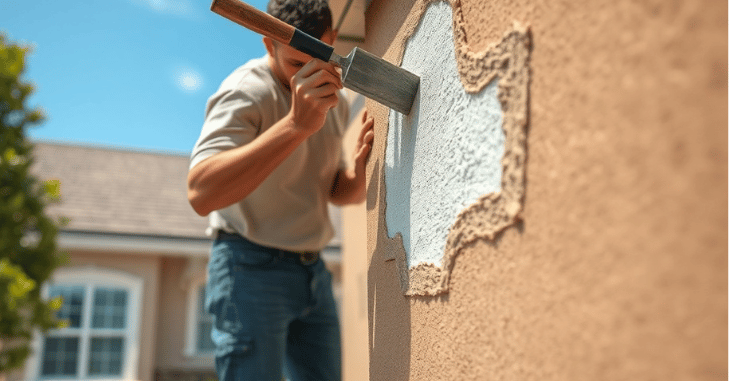
Here’s a complete, easy-to-follow process to repair any stucco damage.
Repairing Hairline Cracks
Steps:
- Clean the area: Remove dust and loose paint with a wire brush.
- Apply caulk: Fill the crack with textured acrylic latex caulk.
- Smooth and finish: Use your finger or a putty knife to flatten it.
- Paint: Once dry, touch up with matching paint for a uniform look.
Tip: Use textured caulk for rough surfaces so the repair blends naturally.
Fixing Medium to Large Cracks
Steps:
- Widen the crack: Use a chisel to create a V-shaped groove for better adhesion.
- Clean and dampen: Remove debris and mist the area with water.
- Apply stucco patch: Fill the groove using a trowel in thin layers.
- Match the texture: Use a sponge or brush to recreate the original finish.
- Cure and paint: Allow to dry for 48 hours, then repaint.
Repairing Stucco Holes
Steps:
- Remove damaged material: Chisel away crumbling stucco until you reach solid substrate.
- Inspect the lath: Replace if rusted or broken.
- Apply bonding agent: Ensures strong adhesion between layers.
- Patch in layers: Apply the stucco mix in thin coats, allowing each to harden.
- Blend texture and paint: Match the wall’s surface and color once cured.
Fixing Water-Damaged or Bulging Stucco
Steps:
- Find the moisture source: Check gutters, downspouts, and window seals.
- Cut out damaged stucco: Remove all loose or soft sections.
- Dry and repair base: Replace wet sheathing or insulation.
- Reapply new stucco: Install metal lath and apply fresh layers.
- Seal and repaint: Use a high-quality waterproof sealer and paint.
Matching Stucco Texture and Color
When learning how to repair stucco, achieving a seamless finish means matching both the texture and color carefully. Use tools like a sponge, trowel, or brush to recreate the wall’s original texture. Dab lightly for rough finishes or apply smoothly for even surfaces.
For color matching, use leftover paint or mix pigments into the stucco compound, testing a small area first since stucco typically dries lighter than it looks when wet. Taking the time to match texture and color ensures your stucco repair blends perfectly with the rest of your wall.
Preventing Future Stucco Damage
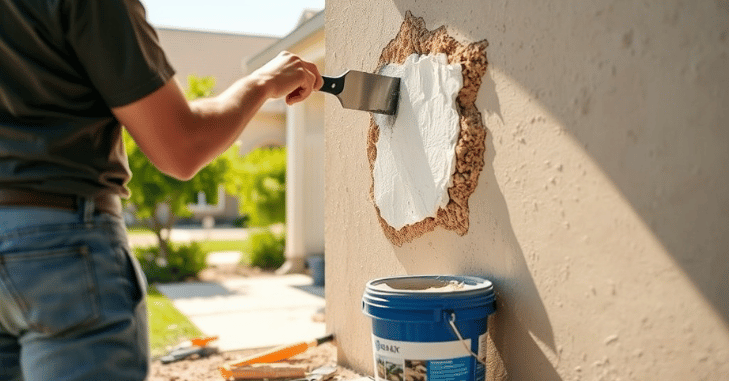
Once you learn how to repair stucco, maintaining it properly will keep it in top shape for years.
Inspect Regularly
- Look for cracks or soft spots every six months.
- Early detection saves costly repairs.
Maintain Drainage
- Keep gutters and downspouts clean.
- Ensure water flows away from walls.
Repaint Every 5–7 Years
- Use breathable, waterproof paint to prevent moisture absorption.
Seal Openings
- Reapply caulk around windows, doors, and joints regularly.
Protect from Landscaping Damage
- Keep sprinklers and plants from spraying or touching stucco walls.
Cost of Stucco Repair
| Type of Repair | Average Cost (USD) | Details |
| Hairline crack repair | $100–$300 | Simple caulking or patching |
| Medium crack repair | $300–$800 | Filling, texture, and repainting |
| Hole repair | $500–$1,200 | Includes new lath and patch |
| Water damage repair | $1,000–$3,000 | Full removal and rebuild |
| Full stucco replacement | $4,000–$10,000+ | For severe structural issues |
Conclusion
Understanding how to repair stucco is essential for keeping your home’s exterior durable, attractive, and weather-resistant. Whether you’re fixing small hairline cracks, patching larger holes, or addressing water-damaged areas, timely repairs prevent costly structural issues down the line.
Stucco may be strong, but like any exterior finish, it needs consistent care and attention. By learning the right repair methods, maintaining proper drainage, sealing openings, and performing regular inspections, you can extend your stucco’s lifespan and preserve your home’s beauty for decades.
With this complete guide on how to repair stucco, you’ll have the knowledge and confidence to keep your home’s exterior strong, seamless, and built to withstand any season.
Want to know about Kohls Kitchen Rugs: Types, Uses, Sizes, brands, Functionality, Features Check out our Home Improvement category.
FAQs
A bonding compound, or primer, will be applied to promote adhesion between the existing and new layers of stucco.
Taking care of them right away will stop them from getting worse.
Finally, to provide a long-lasting solution, the stucco layers will be reapplied utilizing contemporary materials and method.