

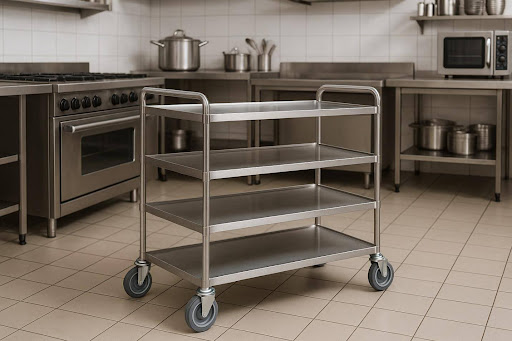
Introduction: Why Mobility Matters in Commercial Kitchens
In the fast-paced environment of a commercial kitchen, every piece of equipment needs to work seamlessly—right down to how it moves. From prep stations to refrigeration units and service carts, mobility can make or break the efficiency of food operations. The ability to quickly relocate or clean around heavy equipment helps staff stay productive, reduces risk of accidents, and keeps hygiene standards high.
Whether you’re retrofitting existing kitchen equipment or setting up a new facility, selecting the right type of casters may not seem like a high-stakes decision—but it absolutely is. The wrong selection can result in damaged floors, unstable movement, or frequent breakdowns that disrupt workflow. Choosing correctly involves more than just size and shape—it requires a balance of durability, load capacity, and adaptability to unique kitchen conditions.
This guide is designed to walk you through the essential factors, tradeoffs, and decision points so you can make the most practical, informed choice for your kitchen setup.
What Are Caster Wheels? A Brief Overview
A caster wheel is a component that allows heavy equipment to be moved with ease. It typically consists of a wheel mounted to a bracket or yoke that can be fixed or pivoting. This simple invention supports a wide range of industries, but in commercial kitchens, it plays a particularly important role by combining hygiene, safety, and operational efficiency.
There are two primary types of caster wheels: rigid and swivel. Rigid wheels move in a straight line, while swivel casters rotate 360 degrees, making them ideal for tight corners and high-mobility needs—such as under prep tables, rolling racks, or mobile cooking stations.
Commercial kitchens often use a combination of both, with swivel models in the front for maneuverability and rigid ones in the back for stability. Understanding the right combination—and the right specifications—is the first step to building a kitchen that moves with your team.
Key Factors to Consider When Choosing Caster Wheels
Not all caster wheels are created equal. The conditions in a commercial kitchen are intense: spills, heat, cleaning chemicals, and constant motion all contribute to wear and tear. Below are some of the most critical elements to consider:
- Load Capacity – How much weight will each wheel need to support?
- Floor Type – What kind of flooring is present (tile, concrete, etc.)?
- Exposure to Moisture or Heat – Will the wheels be exposed to steam, water, grease, or high temperatures?
- Frequency of Movement – Is the equipment moved multiple times a day or only during deep cleaning?
- Cleanliness Requirements – Do you need smooth-surfaced wheels for easy sanitation?
- Noise Considerations – Does your workspace benefit from quieter movement?
- Brake Requirements – Should the wheels lock into place for added safety?
Each of these variables can lead you toward different material types, mounting styles, and wheel bearings. Let’s break down the most impactful considerations one by one.
1. Load Capacity and Weight Distribution
This is one of the most critical factors when selecting caster wheels. A miscalculation can lead to equipment tipping, caster failure, or damage to flooring. Start by weighing the equipment when fully loaded—including any tools, ingredients, or accessories that remain on or inside during movement.
Divide that total weight by the number of wheels used, and add a safety buffer (typically 30% over the expected load). For instance, if your loaded rack weighs 800 lbs and uses four wheels, each caster should be rated for at least 260–300 lbs.
Tradeoff: Higher-capacity wheels often have a larger footprint, which may limit compatibility with compact equipment frames. You’ll need to ensure that increased durability doesn’t hinder storage or access.
2. Floor Conditions and Surface Types
Kitchen floors are often made of tile or sealed concrete—both of which can be slippery or uneven. Some are kept consistently wet or greasy, increasing the risk of caster wheels skidding or catching debris.
Choose wheels that offer floor protection and grip, such as thermoplastic rubber or polyurethane. These materials reduce vibration and noise while offering better traction on slick surfaces.
Tradeoff: Softer wheel materials provide better traction and noise reduction, but may wear out faster under heavy loads. Harder wheels like nylon or phenolic perform better under high pressure but can be noisy or cause surface scuffing.
3. Environmental Conditions: Heat, Moisture, and Chemicals
Casters in kitchens are often exposed to steam, hot oil, spills, or chemical cleaning agents. Standard steel or iron components may corrode or break down quickly under these conditions.
Look for stainless-steel mounting plates, sealed bearings, and heat-resistant wheel materials that can withstand wash-down protocols and prolonged exposure to heat. This is particularly important in bakery or high-temp cooking environments.
Tradeoff: Corrosion-resistant components often come at a higher price point. However, the added longevity and lower maintenance costs usually justify the initial investment.
4. Mobility and Maneuverability Requirements
Equipment that is frequently repositioned—like prep tables, fryers, or refrigerated units—needs to move smoothly in tight kitchen layouts. This is where choosing the right mix of rigid and swivel casters is essential.
Swivel casters are ideal for tight turns and confined spaces, while rigid wheels offer better straight-line stability. For items like utility carts or mobile racks, swivel wheels on all four corners offer maximum control.
Tradeoff: All-swivel configurations are easier to steer but can be less stable when rolling over thresholds or uneven surfaces. Mixing two swivels and two fixed wheels gives more control at speed but reduces flexibility.
Tradeoffs and Challenges in Selecting Caster Wheels
Finding the “perfect” caster wheel often means compromising between cost, durability, performance, and hygiene. Here are a few of the most common challenges:
- Cost vs. Longevity: Budget casters may fail sooner, resulting in more frequent replacements and downtime.
- Mobility vs. Stability: Highly maneuverable wheels may not be ideal for stationary equipment.
- Load vs. Floor Protection: High-load casters can damage soft floors unless properly matched with the right material.
- Heat Resistance vs. Shock Absorption: Some high-temp wheels don’t absorb vibration well, affecting fragile equipment.
The goal isn’t to find one wheel that does everything perfectly but to identify what matters most for each use case—and choose accordingly.
Wrapping Up: Balancing Performance, Safety, and Cost
Choosing the right caster wheels for your commercial kitchen equipment isn’t just a technical detail—it’s a strategic decision that impacts safety, workflow, cleanliness, and even maintenance costs. From load capacity and floor type to moisture resistance and maneuverability, each factor plays a role in selecting wheels that support your team’s performance without compromise.
By understanding the tradeoffs involved and evaluating your unique kitchen environment, you can make a decision that supports smooth operations—day after day, shift after shift.
If you’re unsure which caster wheel configuration is right for your setup, consult with a specialist or supplier who can help you weigh these factors against your operational needs. It’s a small component, but one that can make a big difference.