
If your pet tenses up the second a carrier comes out, you already know how hard a vet visit can feel. Some dogs shake in the parking lot. Some cats stop eating after a stressful outing. Some older pets cannot manage the car ride at all. You are not overreacting if you have wondered how a proper exam can even happen at home, especially without the raised metal table most people picture in a clinic. For many families, working with an at-home veterinarian Houston pet owners trust can make that experience far less stressful.
The short answer is that a mobile veterinarian physical exam does not depend on a traditional exam table. It depends on safe handling, a calm setting, good observation, and a vet who knows how to adapt the exam to the pet in front of them. In many cases, the home setting gives the vet a clearer view of your pet’s normal movement, breathing, comfort level, and behavior than a clinic ever could.
At home pet exams rely on positioning, handling, and observation
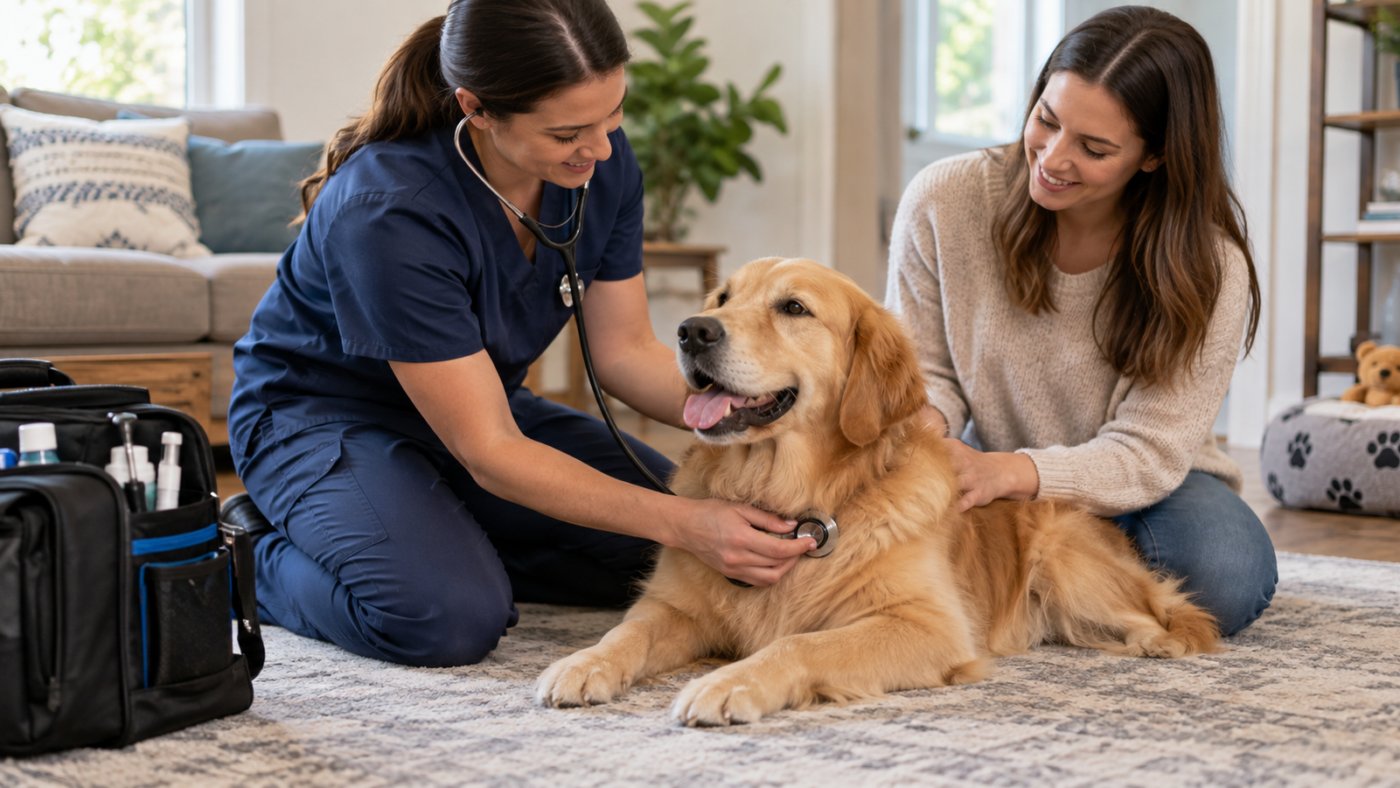
A physical exam is not one single act that only works on a table. It is a series of checks. The vet watches how your pet stands, walks, turns, breathes, and responds to touch. They listen to the heart and lungs, feel the abdomen, check the eyes, ears, mouth, skin, joints, and lymph nodes, and assess pain, hydration, weight, and body condition. All of that can happen on a floor, a couch, a pet bed, a sturdy ottoman, or in your lap if your pet is small and comfortable there.
That matters because stress changes the exam. A frightened dog may pant so hard that normal breathing sounds are harder to hear. A terrified cat may crouch, freeze, or lash out, which limits what the vet can learn. Texas A&M Veterinary Medicine explains how common stressful situations for pets can affect behavior and well-being. Home visits reduce many of those triggers before the exam even starts.
The setup is usually simpler than people expect. For a large dog, the exam often happens right on the floor where the dog already feels secure. For a cat, the best spot may be a quiet room, a windowsill, a bed, or even the bottom half of the carrier if that feels safest. For a small dog, the vet may use a stable counter with a nonslip mat or sit beside you and examine the pet on a blanket. The goal is not to recreate a clinic table. The goal is to create a safe surface with enough control to complete the exam without pushing your pet past their limit.
Mobile vet appointments often improve exam quality for anxious and senior pets
You may worry that home care means a less thorough exam. For many pets, the opposite is true. A mobile vet can see things that disappear in a clinic. Is your dog slipping on hardwood floors? Does your cat struggle to jump onto the sofa? Is your senior pet pacing at night, drinking from several bowls, or guarding one side of the body when turning? Those details shape the exam and the plan that follows.
Senior pets benefit in obvious ways. Arthritis, weakness, poor vision, and incontinence all make travel harder. A painful pet may look “aggressive” in a clinic when they are really just bracing for more discomfort. At home, they are often easier to approach and easier to assess. That is one reason many families seek in home veterinary exams when a pet’s health starts to change.
There is also the emotional side. If boarding or travel has ever left your pet unsettled for days, you have probably started planning your life around avoiding that stress. Texas A&M also discusses planning ahead to reduce stress for pets during disruptions to routine. Vet care is no different. Less disruption often means a better experience and a more accurate exam.
Mobile veterinarian visits use practical surfaces instead of a standard exam table
A traditional table helps with height and control. It is useful, but it is not magic. Mobile vets replace it with tools and technique. They bring stethoscopes, otoscopes, thermometers, scales when needed, nail trim supplies, blood draw equipment, and nonslip materials. They choose the exam spot based on your pet’s size, mobility, and temperament.
| Exam Setting | Common Surface | Best For | Main Advantage | Main Limitation |
|---|---|---|---|---|
| Clinic exam room | Raised exam table | Small to medium pets, fast restraint | Height helps access and positioning | Higher stress for many pets |
| Home floor exam | Blanket or nonslip mat | Large dogs, senior pets, painful pets | Low stress and easier movement assessment | Less height for the examiner |
| Home furniture exam | Couch, bed, ottoman, sturdy counter | Cats and small dogs who relax there | Uses a familiar, secure spot | Surface must be stable and safe |
| Carrier based cat exam | Bottom half of carrier with towel | Fearful cats | Minimal handling at the start | May require a slower exam pace |
The right surface depends on what the vet needs to evaluate. If your dog has a limp, the floor is often better than a table because gait and joint use are easier to watch. If your cat needs an ear exam, a bed with a towel may be enough. If blood needs to be drawn, the vet may ask for a brighter area or a firmer surface. This flexibility is part of how mobile veterinarians provide care at home safely and effectively.
Simple preparation helps the mobile vet exam go smoothly
Choose one quiet area. Pick a room with decent light, low noise, and enough space for the vet to move around. Put away other pets if they tend to crowd or react. Have your dog on a leash if needed, and leave your cat where they feel most secure instead of chasing them from room to room right before the visit.
Use the surfaces your pet already trusts. Set out a blanket, pet bed, or towel that smells familiar. If your pet has mobility issues, avoid slippery floors. If they are small, identify one sturdy surface the vet can use if needed. Familiar footing helps your pet settle and gives the vet a safer exam space.
Write down what you have noticed. Appetite changes, coughing, vomiting, limping, thirst, bathroom habits, sleep changes, and new behaviors all matter. Home visits are ideal for connecting those details to what the vet sees in real time. That often leads to faster answers and a plan that fits your pet’s daily life.
Home based veterinary care can still be thorough and personal
If you have been picturing a missing exam table as a missing piece of care, you can let that fear ease a bit. A skilled mobile vet adjusts the exam to your pet, not the other way around. For anxious pets, senior pets, and animals who shut down in a clinic, that often means a calmer visit and better information.
Your pet does not need a cold metal table to be examined well. They need a setting where they can be seen clearly, handled gently, and evaluated without extra fear piled on top of the problem that brought you there in the first place.