

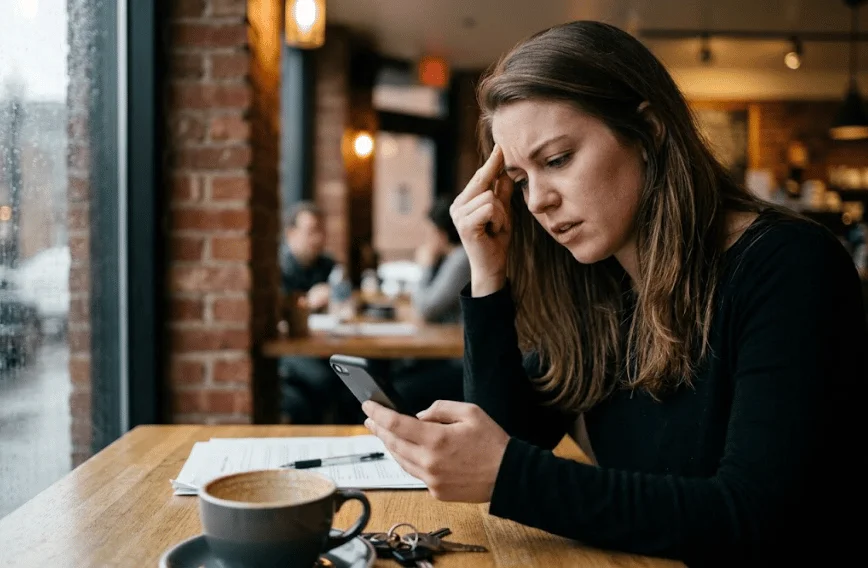
If you searched for the FML text acronym, it usually means “fuck my life.” People type it after something frustrating, embarrassing, disappointing, or unlucky happens. Despite the strong wording, it often expresses temporary annoyance or exaggerated humor rather than a literal statement about someone’s life. More from us: “Ya I Think So”.
Quick answer: FML is short for the profane phrase spelled out above. People use it to react to frustration, embarrassment, bad luck, or an annoying situation, often with humor or exaggeration. Because the phrase contains profanity, it fits casual conversations better than work, school, or other formal settings.
| Quick fact | What to know |
|---|---|
| Abbreviation | FML |
| Most common meaning | A blunt, profane complaint about bad luck |
| Type | Internet slang; technically an initialism |
| Usual tone | Frustrated, embarrassed, sarcastic, or joking |
| Common places | Texts, group chats, captions, comments, gaming chats |
| Profanity | Yes, the full phrase contains a strong swear word |
| Best setting | Casual conversations with people who are comfortable with profanity |
| Safer alternatives | “What a day,” “my luck,” “ugh,” or “that went badly” |
Key Takeaways
- The abbreviation normally expresses frustration, bad luck, disappointment, or embarrassment.
- People often use it dramatically or humorously after a small problem.
- The surrounding message determines whether the sender is joking or genuinely upset.
- It contains abbreviated profanity, so it may be unsuitable for professional or formal communication.
- Its basic meaning stays similar across texting and major social platforms.
- A supportive reply usually works better than copying the sender’s dramatic tone.
What Does the FML Text Acronym Mean?
Merriam-Webster defines the abbreviation as that same informal phrase. In everyday messages, it works like a short reaction to an unpleasant situation. Someone can express an entire “this day is going badly” feeling with three letters.
The wording sounds intense, but the situation may be minor. A person might use it after missing a train, forgetting an assignment, breaking a phone screen, or sending a message to the wrong chat. Context tells you whether the sender is laughing at the situation, venting frustration, or dealing with something more serious.
What Does It Sound Like in a Real Text?
The abbreviation usually appears after the problem rather than replacing the whole story. This structure makes it feel like a punch line or a frustrated final comment. Dictionary.com similarly describes it as something commonly placed at the end of a negative story.
Examples include:
- “Locked my keys in the car again. FML.”
- “I studied the wrong chapter for tomorrow’s quiz. FML.”
- “Sent the screenshot to the person I was talking about. FML.”
- “My flight got delayed after I reached the airport early. FML.”
- “I finally made dinner and dropped the plate on the kitchen floor. FML.”
These examples can carry different levels of emotion even though the basic idea is similar. The first few may sound comic or self-deprecating, while a message connected to a major setback could sound much more serious. Emojis, punctuation, earlier messages, and your relationship with the sender all help establish the tone.
Is It Usually Serious or a Joke?

Most casual uses are exaggerated reactions to a specific bad moment. The sender usually means something closer to “my luck is awful today” than a literal rejection of their whole life. That difference matters because internet slang often uses extreme language for comic effect.
Still, read the full conversation instead of assuming every use is a joke. If the person is discussing a breakup, job loss, grief, severe stress, or another major problem, a thoughtful response makes more sense than laughing automatically. If their messages also mention self-harm or not wanting to live, focus on their safety and take those statements seriously.
Is FML Rude or Offensive?
The abbreviation hides most of the spelling, but it still represents a profanity. Friends who already swear around each other may see it as ordinary casual language, while other people may consider it crude. Your audience matters more than the fact that the swear word appears in shortened form.
It is usually a poor choice for emails to a boss, messages to customers, formal schoolwork, or professional public posts. A workplace chat can also include people with different comfort levels around profanity. If you wouldn’t write the full phrase in that setting, using its three-letter version probably isn’t a safe substitute.
Cleaner alternatives include:
- “What a day.”
- “Of course that happened.”
- “My luck today.”
- “This is frustrating.”
- “Ugh.”
- “That went badly.”
- “I can’t catch a break.”
How to Reply When Someone Sends It
Your best reply depends on what happened and how well you know the sender. A small embarrassing mistake may invite humor, while bad personal news calls for more empathy. You don’t need to use the same slang to show you understood.
For a light problem, you might answer with “That’s brutal,” “No way,” or “Your luck today is unbelievable.” For a stressful situation, try “That sounds rough. Are you okay?” or “Want to talk about what happened?” A short response that matches the real emotion behind the message usually feels more natural than trying to sound clever.
Does the Meaning Change on Snapchat, TikTok, Instagram, or Discord?
The core meaning usually stays the same across private texts, Snapchat, TikTok, Instagram, Discord, gaming chats, and comment sections. What changes is the presentation and the amount of context available. A caption may use the shorthand as a joke, while a private message may communicate a more personal frustration.
Emojis can also shift the tone. A laughing face can make the statement feel comic, while a crying face may indicate stronger disappointment or exaggeration. If you enjoy learning how visual reactions affect digital messages, Smagazinego also has a guide to using Genmoji and expressive messaging.
Digital communication includes more than slang, so it helps to notice how words, images, profiles, and platform habits work together. Smagazinego’s PFP Creator guide covers another part of how people present themselves online. You can also browse the site’s Tech section for related guides about phones, apps, and online tools.
Is FML an Acronym or an Initialism?
People commonly call it an acronym because “acronym” is often used broadly for shortened expressions. Technically, it is better described as an initialism because people normally say the individual letters, “eff-em-ell,” rather than pronouncing them as one word. Wiktionary also categorizes the slang expression as an initialism used in internet slang and text messaging.
That technical difference rarely matters in a normal conversation. Searching for “acronym meaning” will still lead you to the intended slang definition. Knowing the distinction can help with writing, language classes, or discussions about how online abbreviations work.
Where Did the Expression Come From?
The underlying phrase existed before social media became part of everyday phone use. Dictionary.com traces an early online definition of the shortened form to a May 13, 2005 Urban Dictionary entry. The expression later became closely associated with FMyLife, a site built around short stories about unfortunate, awkward, and comic experiences.
Know Your Meme dates the English FMyLife site to January 2009 and notes that its French predecessor, Vie de merde, launched in January 2008. The format helped reinforce the phrase as a short ending to stories about personal mishaps. Years later, people still use the abbreviation in much the same emotional way.
Similar Texting Expressions
Several online expressions communicate related feelings, but they are not interchangeable in every message. Some express frustration, while others can carry completely different meanings depending on context. Looking at them side by side makes the distinctions easier to remember.
| Expression | Common meaning | Typical tone |
|---|---|---|
| FML | The profane phrase explained above | Frustration, bad luck, embarrassment |
| HML | “Hate my life” or “hit my line” | Negative reaction or invitation to contact |
| LML | “Love my life” or “laughing mad loud” | Positive reaction or laughter |
| SMH | “Shaking my head” | Disbelief, disappointment, annoyance |
| WTF | A profane exclamation of disbelief | Shock, confusion, anger |
| Ugh | Frustrated reaction | Annoyance without an acronym |
HML deserves extra attention because its meaning can change sharply. Dictionary.com records both “hate my life” and “hit my line,” making the surrounding conversation essential. LML can also mean either “love my life” or “laughing mad loud,” so reading slang mechanically can lead to mistakes.
When the Message May Deserve a Serious Response
A three-letter expression cannot tell you everything about someone’s emotional state. If the complaint involves a harmless inconvenience, there may be little reason for concern. If the person has been describing hopelessness, severe distress, or thoughts of self-harm, the surrounding statements deserve more attention than the slang itself.
Respond to the person rather than debating what the abbreviation normally means. Ask whether they are safe, listen to what they say, and encourage immediate support if they indicate that they may harm themselves. The same shorthand can appear in both jokes and painful conversations, which is why context should guide your response.
For readers trying to build healthier habits around stressful online content, Smagazinego’s guide to reducing doomscrolling offers practical ideas for changing phone and social-media routines. That topic is separate from slang, but both show how online communication can affect mood. Paying attention to context helps you respond more thoughtfully.
Frequently Asked Questions
Is the FML text acronym rude?
Yes, it represents a phrase containing a strong swear word, even when the letters hide most of it. Friends may use it casually without intending to offend anyone. Professional, school, customer-facing, and family settings often call for a cleaner alternative.
What does it mean when a girl or guy texts it?
The basic meaning does not change because of the sender’s gender. A woman, man, or nonbinary person can use it to communicate frustration, embarrassment, disappointment, or bad luck. The situation and the sender’s usual communication style tell you far more than gender does.
Can it be used as a joke?
Yes, humorous exaggeration is a common use. Someone may type it after a tiny inconvenience because the dramatic wording makes the story funnier. You should still consider the surrounding message before assuming the sender wants a joking response.
Is it appropriate to use at work?
It is safer to avoid it in most professional communication because the full expression includes profanity. Even a casual office chat may include coworkers, clients, or managers who find that language inappropriate. Phrases like “rough day” or “that was frustrating” convey the same basic feeling with less risk.
Does it have other meanings?
Other expansions can appear in jokes, niche communities, or specialized contexts, but the profanity-based meaning dominates casual US texting. Wiktionary lists euphemistic alternatives such as “fix my life” and “forget my life,” but these are not the standard interpretation. If the surrounding conversation is technical or specialized, check that context before assuming the slang definition.
Should I worry if someone sends it?
Not automatically, because people often use the expression after ordinary annoyances. Pay closer attention when the message appears alongside hopelessness, major personal problems, or statements about self-harm. In those cases, respond to the serious content rather than dismissing the message as internet slang.
The Bottom Line
In casual US texting, the three-letter shorthand is normally a blunt way to say that something has gone wrong. It can communicate bad luck, embarrassment, irritation, or comic self-pity without requiring a long explanation. Most everyday uses are exaggerated, but the full conversation determines how seriously you should read it.
If you plan to use the expression yourself, save it for informal conversations where profanity is acceptable. If someone sends it to you, match your response to the situation rather than the letters alone. That approach helps you understand both the slang and the person behind the message.