

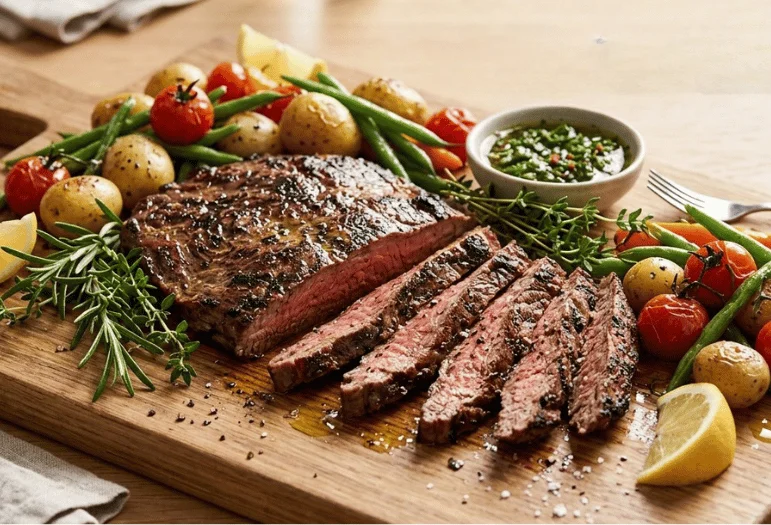
Most flank steak nutrition facts stop at calories and protein. That skips the part a dietitian reads first. Flank is dense in vitamin B12, zinc, selenium, and niacin, and thin in sodium. This guide reads the whole panel.It also decodes the percent Daily Value column, the one shoppers skim past on the right side of the label. Every figure below traces back to a named USDA record for broiled beef, so you can check the math yourself.
Key takeaways
- A 3 oz broiled portion covers 62% of the Daily Value for vitamin B12 and 48% for selenium.
- Zinc lands at 39%, which clears the FDA threshold for a high source.
- Iron reaches only 9%, well below what the cut’s reputation suggests.
- The %DV column uses one fixed adult standard, not your own calorie target.
- Creatine never appears on a Nutrition Facts panel or in the USDA database.
Flank steak nutrition facts per 3 oz cooked
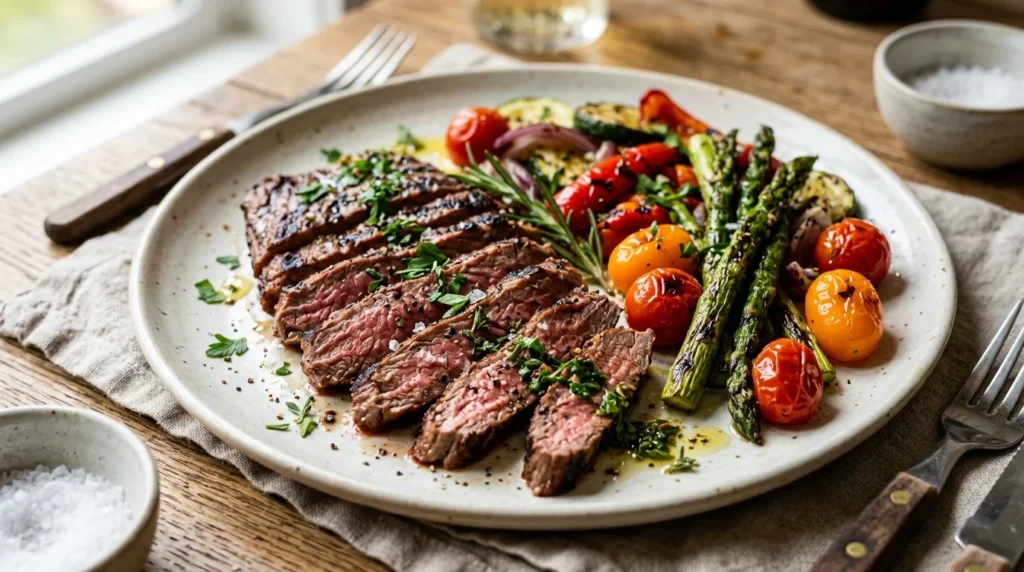
A 3 oz broiled serving of choice flank, trimmed of separable fat, carries about 165 calories. It delivers 62% of the Daily Value for vitamin B12, 48% for selenium, 44% for niacin, and 39% for zinc. Sodium sits near 48 mg, which is 2% of the daily target. Protein covers 47%.
According to USDA FoodData Central, record NDB 13070 covers broiled Choice flank trimmed of separable fat. Per 3.5 oz, it lists 1.74 mcg of vitamin B12, 31.2 mcg of selenium, and 5.11 mg of zinc. Database entries run per 3.5 oz. Labels run per 3 oz, so the two never match exactly.
| Nutrient | Amount per 3 oz cooked | % Daily Value |
|---|---|---|
| Vitamin B12 | 1.5 mcg | 62% |
| Selenium | 26.5 mcg | 48% |
| Niacin | 7.0 mg | 44% |
| Zinc | 4.3 mg | 39% |
| Vitamin B6 | 0.49 mg | 29% |
| Cholesterol | 68 mg | 23% |
| Choline | 90 mg | 16% |
| Phosphorus | 179 mg | 14% |
| Iron | 1.6 mg | 9% |
| Riboflavin | 0.12 mg | 9% |
| Potassium | 287 mg | 6% |
| Magnesium | 20 mg | 5% |
| Sodium | 48 mg | 2% |
What the percent Daily Value column really means
That column answers one question. How much of a day’s target does a single serving cover? The reference is fixed for adults and children over four, and it does not flex with your body size, your training load, or your calorie goal. Treat it as a shared yardstick, not a personal prescription.
According to the FDA’s Daily Value guidance, 5% DV or less of a nutrient per serving counts as low and 20% DV or more counts as high. That same page sets the sodium Daily Value at 2,300 mg and the cholesterol figure at 300 mg.
Run flank through that filter, and a pattern shows up fast. Vitamin B12, selenium, niacin and zinc all clear the 20% line. Sodium and magnesium sit at the low end, with potassium just above them. Saturated fat lands in between, near 15%, and that is the number to watch if steak turns up more than twice a week.
Saturated fat, sodium, and what a marinade adds
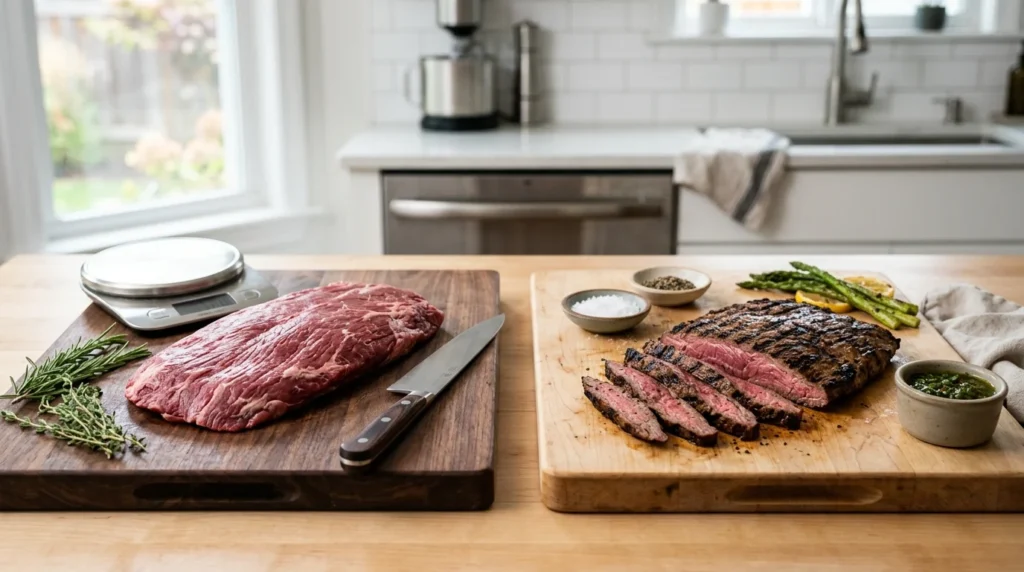
Flank is lean, and it still asks for attention on saturated fat. One 3 oz serving covers roughly 15% of the Daily Value. Stack two servings, add cheese and butter elsewhere, and the day’s target quietly disappears. Total fat is milder at 9%.
Sodium is the other label trap, and it is not the meat’s fault. Plain flank holds about 48 mg per serving. Pre-marinated packs from the meat case often run 300 mg to 700 mg instead. Those marinades lean acidic, built on citrus juice, vinegar, or wine. Acid works on enamel the same way it works on muscle fiber. That is why how acidic diets affect teeth keeps coming up in dental chairs.
- Check sodium per serving, not per package.
- Look for added sugars, common in teriyaki and bulgogi style marinades.
- Read the stated serving size before you trust any percentage.
The B vitamins flank steak brings
Beef carries vitamin B12 in a form the body takes up easily, and plants carry none of it. Absorbable B12 drives most of the nutrition case for red meat. Its B group companions ride along.
- Vitamin B12, 1.5 mcg, 62% DV. Nerve function and red blood cell formation both depend on it.
- Niacin, 7.0 mg, 44% DV. It helps the body release energy from food.
- Vitamin B6, 0.49 mg, 29% DV. It supports the way the body handles protein.
- Riboflavin, 0.12 mg, 9% DV. Smaller, but a real contribution.
- Choline, 90 mg, 16% DV. Often missed, and most Americans fall short of the target.
Zinc, selenium and iron on the same plate
Zinc is the mineral shoppers underrate. One serving brings 4.3 mg, which is 39% of the day. Immune function and wound repair both draw on it, and the body has no storage depot for zinc, so daily intake matters more than a weekly total.
Selenium is quieter. Flank supplies 26.5 mcg per 3 oz, close to half the reference figure, and it feeds the antioxidant enzymes that protect cells from oxidative damage.
Iron is the surprise. At 1.6 mg, flank covers just 9% of the Daily Value, which reads low next to the cut’s reputation as an iron food. Form is the catch. Beef iron is heme iron. Bodies absorb heme iron far better than the non-heme iron in lentils or spinach, so the percentage understates what reaches your bloodstream.
Creatine, the number no label shows
Creatine is the compound people expect to find and never do. It is absent from every Nutrition Facts panel, and USDA FoodData Central does not track it either. Beef muscle does contain creatine, and heat breaks some of it down during cooking. If you want a figure for creatine in your steak, no label and no government database will hand you one.
Choice, select, and grass-fed on the package
Grades measure marbling, not micronutrients. According to the USDA Agricultural Marketing Service, which sets 8 quality grades for beef carcasses, Choice requires a minimum small amount of marbling and Select a minimum slight amount. More marbling means more fat and about 6% more calories, as the table below shows. Grass-fed is a separate claim about how the animal was raised, and FoodData Central has no grass-fed flank record at all. Its only grass-fed beef entry is raw ground beef, so nobody can pull a grass-fed flank comparison from the official data.
| USDA record, per 3 oz broiled | Calories | Saturated fat | Vitamin B12 | Zinc |
|---|---|---|---|---|
| Flank, lean only, Choice (NDB 13070) | 165 | 15% DV | 62% DV | 39% DV |
| Flank, lean and fat, Select (NDB 13949) | 156 | 13% DV | 51% DV | 39% DV |
What a week of meals says about a diet
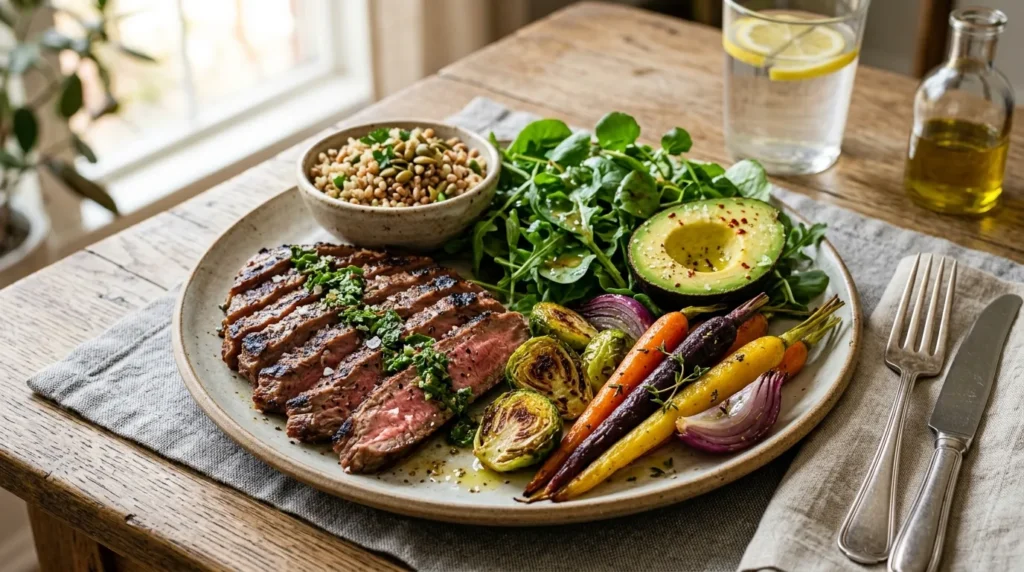
One steak does not make a diet. Pattern does. Rotate flank with fish and lentils across the week, and mineral gaps close on their own without anyone counting a single milligram. Long patterns show up in your mouth, which is what your enamel reveals about diet to a hygienist who has never seen your grocery list.
Kids give you a second reason to think in weeks rather than meals. Steak night is rarely the problem; the sweet drinks and sticky snacks stacked around it are. Advice on nutrition and family dental health makes that same point about frequency.
The bottom line
Read the right-hand column, not just the calorie line. Flank punches above its weight on B12, selenium, niacin and zinc, stays very low on sodium, and asks for restraint only on saturated fat. The grade on the sticker moves the fat, not the minerals. What the marinade adds is usually the bigger swing.
Frequently asked questions
About 165 calories for a broiled Choice portion trimmed of separable fat. A Select graded piece with its fat left on runs slightly lower, near 156.
Yes. One 3 oz serving covers 62% of the Daily Value, which clears the FDA’s 20% threshold for a high source by a wide margin.
Less than its reputation suggests, at 9% of the Daily Value per serving. Whatever iron it does carry is heme iron, and that form absorbs more readily than plant iron.
The USDA database cannot settle that for flank, because it holds no grass-fed flank record. Any grass-fed wording on the sticker is a production claim about the animal, not a nutrition standard.
Creatine, for one. Panels also ignore cooking losses, so a well-done steak will not match a database figure exactly.