

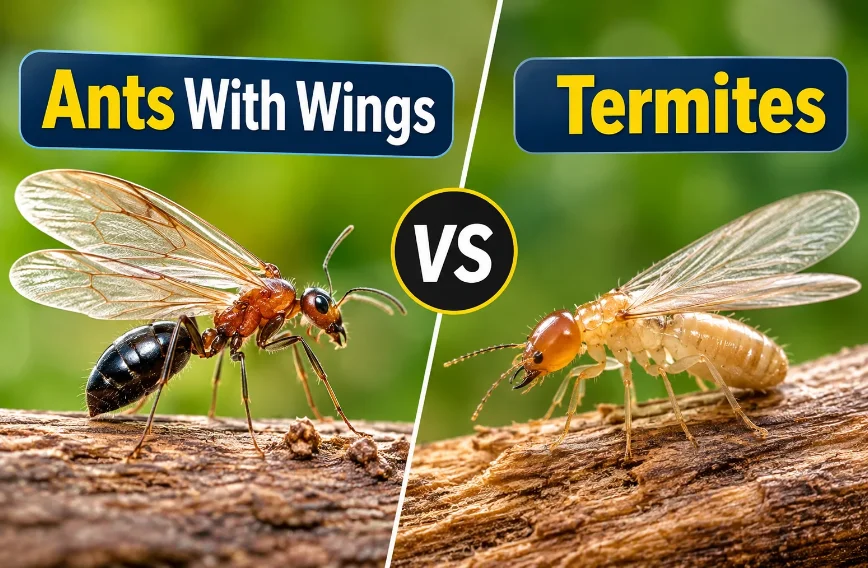
Seeing a cloud of winged insects indoors can make any homeowner nervous. The ants with wings vs termites question matters because these insects can look remarkably similar. Three physical clues usually separate them: their antennae, waist shape, and wing proportions.
Quick answer: Flying ants have elbowed antennae, a narrow waist, and front wings longer than their back wings. Termite swarmers have straighter, beadlike antennae, a broad waist, and four wings of similar length. Finding either indoors deserves attention, but suspected termite activity warrants prompt professional inspection.
Quick Comparison: Flying Ant or Termite?
| Feature | Winged Ant | Termite Swarmer |
|---|---|---|
| Antennae | Bent or elbowed | Straight and beadlike |
| Waist | Narrow and pinched | Broad and fairly uniform |
| Front wings | Longer than rear wings | About the same length as rear wings |
| Body shape | Clearly segmented | More uniform through the middle |
| Shed wings | Possible after swarming | Common after swarming |
| Main concern | Nuisance or possible nesting issue | Possible wood-damaging colony |
| Best response | Identify species and locate activity | Arrange an inspection if found indoors |
University extension resources consistently recommend checking several features together. One broken wing or missing antenna can easily cause a mistaken identification. Compare an intact insect whenever possible before deciding what you found.
Ants With Wings vs Termites: The Three Fastest Identification Clues
The easiest approach is to inspect the insect from above under good lighting. Take a clear photograph before sweeping insects away or discarding them. A phone camera with zoom can reveal features that are difficult to see directly.
1. Look at the Antennae
Winged ants have antennae with a noticeable bend or elbow. The bend usually appears somewhere along the antenna rather than near its tip. This shape is one of the clearest clues when the insect remains intact.
Termite swarmers have straighter antennae that often look like strings of tiny beads. They lack the pronounced elbow seen on ants. University of Maryland Extension lists this difference among its primary identification features.
2. Check the Waist
An ant has a narrow connection between its thorax and abdomen. This creates the familiar pinched or wasp-like waist. The body therefore looks divided into distinct sections.
A termite has a much broader connection through the middle. Its body appears more uniform from the chest toward the abdomen. This difference can remain visible even when the insect has already lost its wings.
3. Compare Both Pairs of Wings
Winged ants have two pairs of wings, but those pairs differ noticeably. Their front wings are longer than their hind wings. This size difference is obvious when the wings lie flat.
Termite swarmers also have four wings. Their front and rear wings are approximately equal in length and shape. Mississippi State University Extension highlights this feature, along with differences in antennae and waist structure.
Why Do Ants and Termites Suddenly Have Wings?
The insects you see flying are reproductive members of established colonies. They leave their original colony to mate and potentially establish another colony. Pest professionals commonly call these reproductive insects swarmers or alates.
Swarming often occurs when environmental conditions suit mating and dispersal. Timing varies by species, climate, moisture, and location across the United States. Warm weather and suitable moisture can trigger especially noticeable swarming events.
After mating flights, both groups may shed their wings. That explains why homeowners sometimes find piles of loose wings near windows or doors. Mississippi State notes that missing wings do not automatically rule out either group.
Does Finding Winged Insects Indoors Mean You Have an Infestation?
Location matters almost as much as appearance. A few insects outdoors near porch lights may have arrived from a nearby colony. Large numbers emerging indoors deserve closer investigation.
An indoor termite swarm can indicate a colony established near the structure. The visible swarmers are reproductive insects, not the workers causing damage. Their appearance can still warn of hidden activity.
Winged ants indoors can also indicate a nest somewhere in the building. Carpenter ants deserve particular attention because they can excavate damaged or damp wood for nesting. They do not consume wood the same way termites do.
Smagazinego’s guide to winter pest behavior also discusses carpenter ants and other insects found inside homes. Indoor pest activity can continue even when outdoor conditions seem unfavorable. That makes location and recurring sightings useful clues year-round.
What Do Shed Wings Tell You?
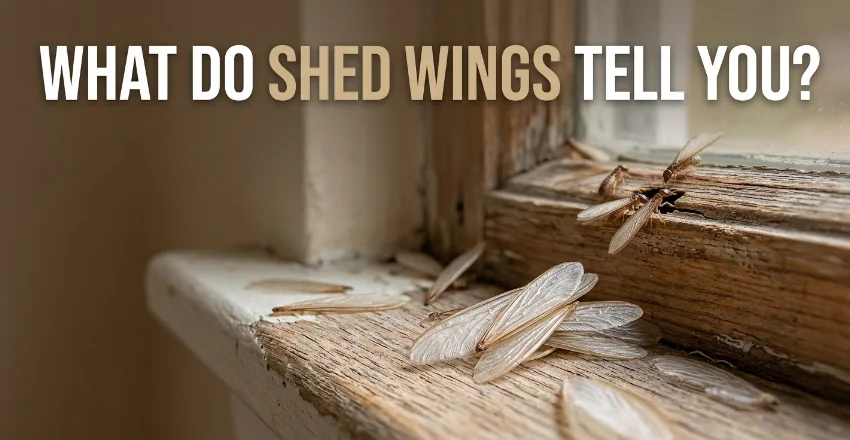
A pile of loose wings is useful evidence, but it is not enough for certain identification. Both reproductive ants and termite swarmers can lose their wings after flight. Whenever possible, look for intact insects near the same location.
Termite wings tend to be similar in size because both wing pairs are comparable. Ant wings normally show greater size differences between the front and rear pairs. A magnifying glass can make this comparison easier.
Pay attention to where the wings appeared. Windowsills, door frames, crawlspaces, basements, and foundation areas can provide valuable context. Photograph the location before cleaning away the evidence.
Which Pest Is More Serious for Your Home?
Termites deserve faster attention because established colonies can feed on cellulose materials within buildings. The insects often remain concealed while workers continue feeding. Visible swarmers may therefore appear after a colony has already become established.
Most household ants do not pose the same structural threat. Carpenter ants are an important exception because they excavate wood for nesting galleries. Moisture-damaged wood can make certain areas more attractive to them.
That distinction doesn’t mean every winged termite indicates extensive damage. It means misidentifying them can be costly. A professional inspection can determine whether active wood-destroying insects are present.
If you’re dealing with other household pests, Smagazinego’s flea exterminator cost guide explains the differences between DIY and professional pest treatment. The correct approach depends heavily on the pest involved. Always identify the pest before treating it.
What Should You Do After Finding Winged Ants or Suspected Termites?
Start by collecting one or two intact specimens when you can do so safely. Place them in a clear container or sealed plastic bag. Clear photographs from above and from the side are also useful.
Next, record exactly where you found the insects. Note whether they emerged from a wall, floor gap, window frame, foundation area, or outdoor surface. Also record whether you found discarded wings nearby.
Avoid spraying unidentified insects simply because they are visible. Killing the swarmers does not necessarily address a hidden colony. Random treatment can also make professional identification more difficult.
When termite traits are present, contact a qualified pest professional for an inspection. A professional can identify the insect and check vulnerable parts of the structure. They can then recommend treatment only when evidence supports it.
For other insects appearing around lawns and soil, Smagazinego also covers ground-nesting insect identification and control. Different winged insects require different responses. Appearance alone should never determine treatment.
Signs That Make a Termite Inspection More Important
A single outdoor swarmer does not always signal a problem inside your house. Several additional clues can raise concern about nearby termite activity. Look at the insect evidence together with conditions around the building.
Watch for these warning signs.
- Repeated indoor swarms from the same room or area.
- Numerous discarded wings near windows or doors.
- Mud-like shelter tubes along foundations or structural areas.
- Wood that appears damaged beneath the surface.
- Recurring swarmer activity from cracks or wall openings.
Do not tear apart walls or structural materials searching for a colony. That can cause unnecessary damage and may disturb useful evidence. A trained inspector can assess likely activity points more systematically.
Can You Identify Them by Color Alone?
Color is a weak identification clue. Ant swarmers can range from tan and reddish brown to dark brown or black. Different termite species also vary in color.
Body structure provides stronger evidence than color. Focus first on antennae, waist shape, and relative wing length. Try to make all three clues agree before concluding.
This matters because dark termite swarmers are sometimes mistaken for ordinary black ants. Likewise, lighter ants may be mistaken for termites. Shape usually provides a more reliable way to identify the home.
Flying Ants vs. Carpenter Ants
“Flying ant” describes a reproductive life stage rather than one specific species. Many ant species produce winged males and females during their reproductive cycle. Therefore, seeing wings does not automatically mean the insect is a carpenter ant.
Carpenter ants can become a property concern because they excavate wood for nesting. They commonly favor wood affected by excess moisture or decay. Their galleries are different from termite feeding damage because ants remove wood rather than eat it.
A species-level identification may require professional help. This becomes more important when large ants repeatedly appear indoors near wood. The simple ant-versus-termite comparison identifies the broad group, not every species.
How to Reduce Future Indoor Swarms
Basic home maintenance can make buildings less attractive to several pest species. Moisture control is especially useful around basements, crawlspaces, roofs, plumbing, and exterior wood. Repair leaks and promptly investigate persistent damp areas.
Seal obvious gaps around windows, doors, utility penetrations, and exterior trim. Keep firewood and unnecessary wood debris away from the foundation. Avoid allowing soil or mulch to remain in direct contact with vulnerable wooden building materials.
Regular inspections can also reveal changes before they become obvious. Check areas where moisture and wood occur together. Include crawlspaces, decks, porch structures, utility areas, and basement framing when accessible.
Frequently Asked Questions
How can I tell ants with wings vs. termites quickly?
Check the waist, antennae, and wings together. Ants usually have elbowed antennae, pinched waists, and longer front wings. Termite swarmers have straighter antennae, broad waists, and wing pairs of similar length.
Are flying ants baby ants?
No, winged ants are not babies. They are mature reproductive ants produced by an established colony. They fly to mate and may attempt to begin new colonies afterward.
Do termite swarmers bite people?
Termite swarmers are mainly focused on reproduction rather than attacking people. Their appearance is more important as a possible sign of a colony. The concern is potential structural activity, not bites from the swarmers.
Why are there wings on my windowsill but no insects?
Swarmers can shed their wings after a mating flight. The insects may then move away or become difficult to spot. Save several wings and look nearby for intact specimens.
Should I spray termite swarmers myself?
Spraying visible swarmers does not eliminate a concealed colony. It may remove the insects you can see while leaving the underlying problem untouched. A professional inspection is better for suspected indoor termite activity.
What if I still cannot tell which insect I found?
Keep a specimen or take several sharp photographs. Compare the waist, antennae, and both wing pairs rather than relying on color. Contact a local extension office or pest professional when identification remains uncertain.
The Bottom Line
Winged ants and termite swarmers become much easier to separate once you know the three main clues. Ants have elbowed antennae, narrow waists, and unequal wing pairs. Termite swarmers have straighter antennae, broad waists, and similarly sized wings.
Finding a swarmer outdoors does not automatically mean your home is infested. Repeated indoor activity deserves more attention, especially when you see termite traits. Document what you found and arrange an inspection rather than guessing at treatment.
Correct identification protects both your home and your budget. You avoid unnecessary pesticide use while reducing the chance of overlooking a wood-destroying pest. When the physical clues remain unclear, professional identification is the safest next step.