

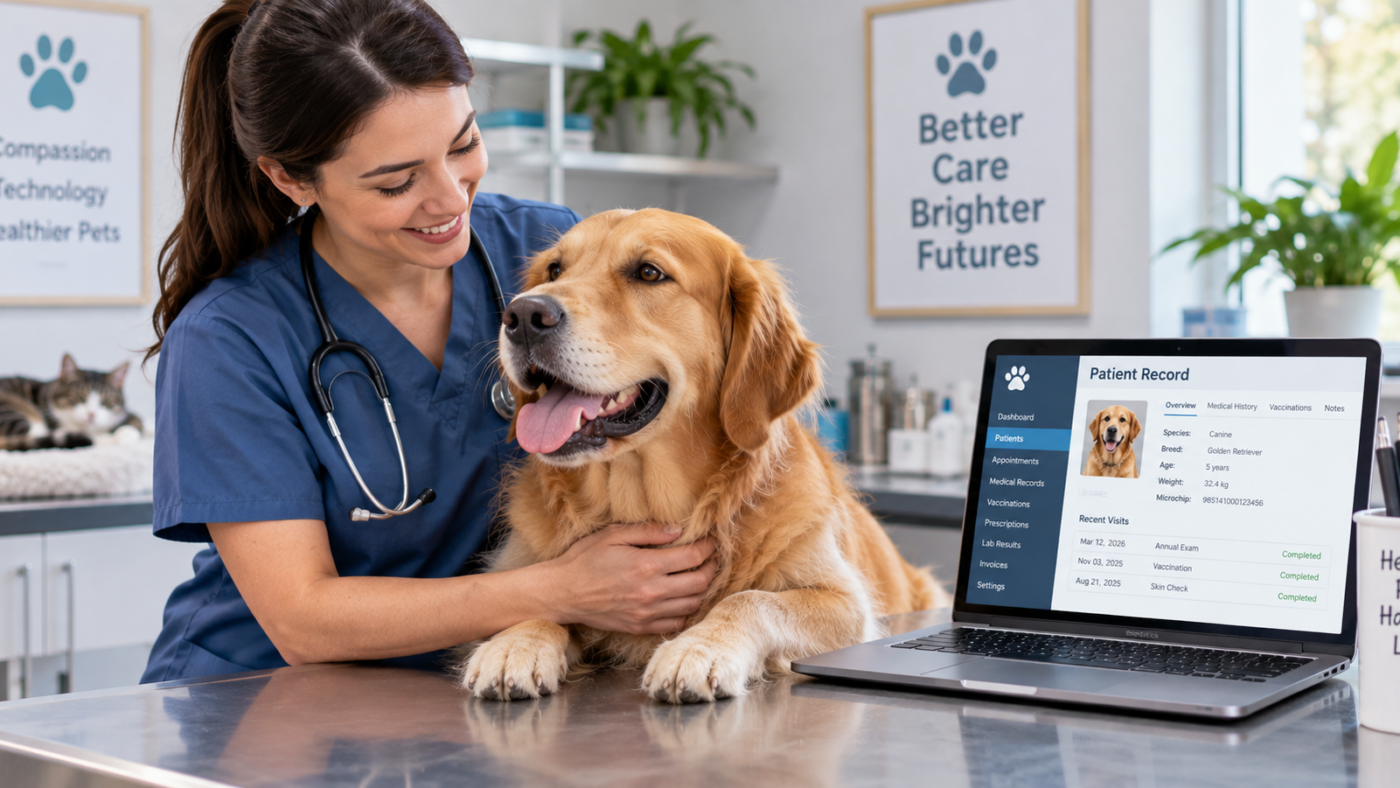
You already know how a busy day in a veterinary hospital can unravel. A patient arrives for urgent care, the phone is ringing, a technician needs vaccine history, and someone is flipping through paper charts that should have been easy to find. That kind of friction wears people down, something St. Joseph vet teams understand well. It slows care, creates stress at the front desk, and leaves too much room for mistakes when your team is already stretched.
That is why so many practices are rethinking how they handle patient information. 3 Key Benefits Of Digital Records In Veterinary Hospitals comes down to something simple. Faster access, better accuracy, and smoother hospital operations. When records are digital, your team spends less time chasing information and more time focused on the animal in front of them.
Digital veterinary records reduce delays that affect patient care
Paper charts often fail at the worst moment. A note is hard to read. A lab result is filed in the wrong place. A treatment sheet is still on a counter when the doctor needs it in the exam room. None of this sounds dramatic until it happens during a sick visit, a surgery check in, or an after hours emergency.
Digital veterinary records solve that problem by making the chart available where care is happening. A veterinarian can review history, medications, allergies, imaging notes, and prior diagnostics from one system instead of piecing the story together from separate folders and memory. That speed matters. It can shape treatment decisions, client communication, and follow up plans in real time.
The benefit is not just convenience. It is continuity. If a pet has chronic kidney disease, diabetes, or a long medication list, a digital record helps your team see patterns over time without sorting through years of paperwork. A complete timeline supports better decisions and fewer missed details.
That need is becoming more pressing across the profession. The AVMA State of the Profession report reflects a field under pressure from staffing challenges, rising demand, and operational strain. When every minute counts, systems that reduce avoidable delays are not a luxury.
Electronic medical records in veterinary hospitals improve accuracy and team communication
Most record keeping problems do not start with bad intent. They start with interruption. Someone gets pulled away mid note. A verbal update never makes it into the chart. A refill request is handled by one person while another staff member is unaware of the latest exam findings. Small gaps stack up, and those gaps create risk.
Electronic medical records in veterinary hospitals give your team one shared source of truth. Treatment notes, discharge instructions, diagnostic results, and reminders live in the same system, which makes it easier for everyone to stay aligned. Reception, technicians, veterinarians, and managers are not working from fragments.
You see the difference in ordinary moments. A client calls and asks when their dog last had a heartworm test. A technician can answer quickly. A doctor wants to confirm whether a cat had a reaction to a past medication. The answer is already documented. A hospitalized patient changes status during the day. The team can update the record in a way others can see right away.
This also supports cleaner communication with clients. When records are legible, organized, and easy to retrieve, discharge plans are clearer and follow up is more consistent. Clients feel that confidence. They may not care what software you use, but they absolutely notice when your team is informed, calm, and prepared.
Veterinary hospital software supports efficiency, revenue protection, and growth
Lost time has a cost. So do missed charges, duplicate work, delayed callbacks, and no shows that were never properly confirmed. A paper based workflow can quietly drain revenue because the breakdowns look small when viewed one at a time. Over a month or a year, they add up.
Veterinary hospital software helps protect the business side of care without making the work feel colder or more mechanical. Charges can be tied to services more reliably. Reminders for vaccines, wellness exams, and follow ups are easier to manage. Inventory, prescriptions, and reporting become easier to track. That structure gives practice owners and managers a clearer view of what is working and where the bottlenecks are.
Training also gets easier when systems are standardized. New staff do not have to learn where each doctor prefers to stash notes or how to decode a charting style that only makes sense to one person. A stronger workflow lowers frustration and shortens the ramp up time for new hires.
If you are weighing whether the change is worth it, continuing education can help frame the decision. This AVMA resource on veterinary records offers useful guidance for practices thinking through documentation standards and workflow improvements.
Paper records and digital records create very different daily outcomes
| Area | Paper Records | Digital Records |
|---|---|---|
| Chart access | One person or room at a time | Multiple team members can access the same file as needed |
| Legibility | Handwriting can be unclear | Typed entries improve readability |
| Medical history review | Time consuming, easy to miss trends | Searchable records make trends easier to spot |
| Client communication | Relies on manual callbacks and chart pulls | Faster access to visit details and follow up plans |
| Billing accuracy | Missed charges happen more easily | Services and charges are easier to connect |
| Storage and security | Physical space required, risk of loss or damage | Centralized storage with controlled access |
Small steps make the shift to digital records easier
Audit your current pain points. Start with the problems your team feels every day. Lost charts, delayed callbacks, refill confusion, incomplete treatment notes, and billing leaks are good places to look. The goal is not to fix everything at once. It is to identify where digital records will bring the fastest relief.
Map the workflow before choosing tools. Software works best when it matches how your hospital actually runs. Look at check in, exam notes, treatment updates, lab results, discharge, and follow up. If the system fights your workflow, staff will resist it. If it supports the flow of care, adoption gets easier.
Train in phases and measure the change. Do not expect a perfect switch overnight. Pick a few core tasks first, such as charting, prescription tracking, and reminders. Then measure response times, missed charges, and staff feedback. Progress becomes clearer when you can point to fewer delays and fewer errors.
Better records support better care
The move away from paper is not about chasing trends. It is about reducing chaos, protecting accuracy, and giving your team a steadier way to work. When records are easier to access and easier to trust, care becomes more consistent for patients and less draining for staff.
If your hospital is feeling the strain of scattered information and slow workflows, this is one place where change can pay off quickly. Start with the process that causes the most stress, then build from there.