
You might feel uneasy about changing your smile. You may also worry about pain, time, or cost. A Monterey dentist can offer options that respect those fears and still give you strong results. This blog explains three cosmetic treatments that keep drilling and tooth removal low. Each choice focuses on protecting your natural teeth. You learn what the treatment is, who it helps, and what to expect in the chair. You also see how each option affects your daily life. There is no fluff. You get clear facts so you can ask sharper questions at your next visit. By the end, you understand which low prep option fits your teeth, your schedule, and your comfort level. You deserve a smile that feels honest and does not drain your energy.
Why choose minimal preparation options
You want a smile that looks natural and still feels like you. Minimal prep treatments keep as much tooth as possible. That respect for your body matters.
These choices help when you want to:
- Protect healthy tooth structure
- Limit shots, drilling, and chair time
- Keep options open for later treatment
According to the National Institute of Dental and Craniofacial Research, once tooth enamel is removed, it does not grow back. You deserve options that guard that enamel when possible.
Option 1: Dental bonding
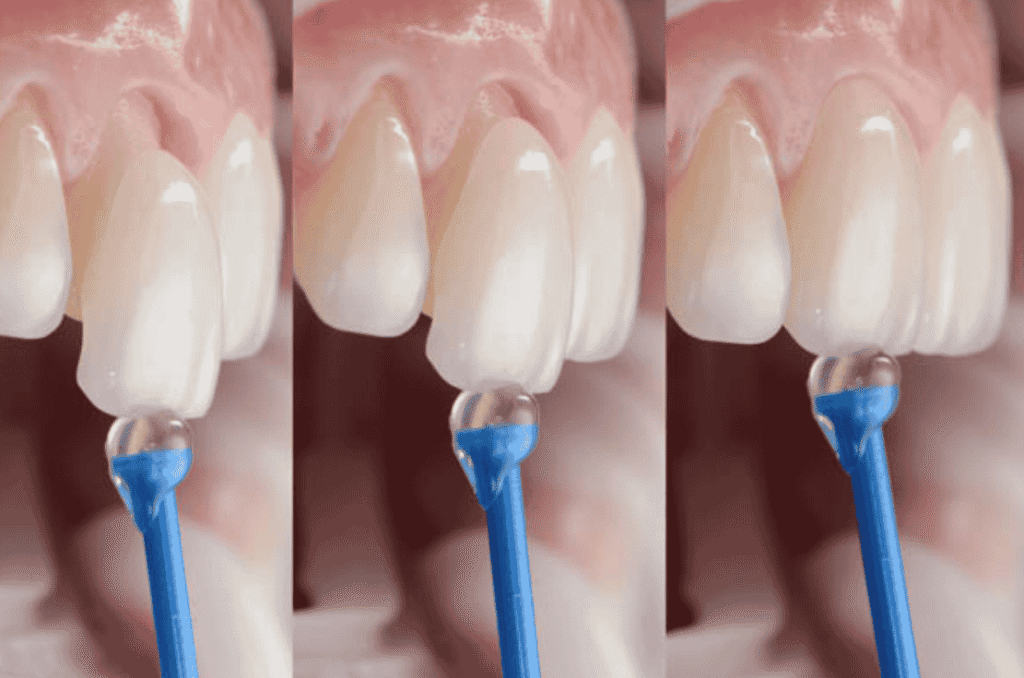
Dental bonding uses tooth colored resin to reshape or repair a tooth. Your dentist roughens the surface, places the resin, shapes it, and cures it with light. In many cases, no drilling touches healthy enamel.
Bonding works well if you have:
- Small chips or worn edges
- Minor gaps between teeth
- Short teeth that need more length
- Stains that do not respond to whitening
Here is what you can expect in the chair:
- Your dentist matches the resin to your tooth color
- The tooth is cleaned and lightly etched
- Resin is placed, shaped, and hardened with a light
- The surface is trimmed and polished
You usually need one visit. You often do not need numbing. You can eat and drink soon after the visit. Bonding can stain over time, so you may need touch ups.
Option 2: Minimal prep veneers
Traditional veneers often need more shaping of the front of the tooth. Minimal prep veneers use very thin shells. The goal is to change the front view of the tooth while removing as little enamel as possible.
Minimal prep veneers can help if you want to:
- Change color across many teeth
- Mask worn or uneven front surfaces
- Close small gaps
- Create a more even smile line
Here is the usual process:
- Planning visit. Photos, x rays, and a talk about your goals
- Tooth shaping. Often only a thin layer is smoothed
- Impressions. The lab uses these to make veneers
- Try in and bonding. Veneers are checked, then bonded with cement
These veneers protect more enamel than older methods. They are not reversible, because some enamel comes off. They can last many years with strong home care and regular cleanings.
Option 3: No prep veneers
No prep veneers sit on top of your existing enamel. Your dentist does not remove tooth in many cases. This option works best when teeth are small, set back, or have space to add material without looking bulky.
No prep veneers may be right when you:
- Have small teeth and want a fuller smile
- Have slight spacing
- Want to avoid shots and drilling
- Need a change that can often be reversed later
The steps are simple:
- Planning and shade matching
- Impressions with no or very little shaping
- Lab fabricates thin shells
- Veneers are bonded to enamel
No prep veneers still need careful planning. If teeth already stick out, extra thickness can look heavy. A careful dentist will show you mock ups before bonding.
Comparison of minimal prep options
| Treatment | Tooth removal | Visits | Best for | Common lifespan |
|---|---|---|---|---|
| Dental bonding | None or very light on surface | Usually 1 | Small chips, gaps, single tooth fixes | About 3 to 10 years |
| Minimal prep veneers | Thin layer of enamel | 2 to 3 | Smile line changes on many teeth | About 10 to 15 years |
| No prep veneers | Often none | 2 to 3 | Small teeth, spacing, fuller look | About 10 to 15 years |
These time frames are not promises. They depend on your bite, grinding, and home care. The Centers for Disease Control and Prevention stresses that strong daily brushing with fluoride and flossing protect any dental work.
How to choose the right option for you
You do not need to walk into the office with a final choice. You only need clear goals. Ask yourself three questions.
- What bothers you most when you see your teeth in the mirror
- How much time and money can you commit right now
- How open are you to future repairs or upgrades
Then bring those answers to your dentist. A careful exam will include:
- Review of your health history
- Check for decay or gum disease that must be treated first
- Photos and x rays to study bite and jaw forces
- Discussion of color, shape, and size that feel true to you
You can ask direct questions.
- How much tooth will you remove for this option
- What will this look like in five years
- What are the low cost repair choices if something chips
Life after treatment
Any cosmetic work needs care. That care is simple but steady.
- Brush with fluoride toothpaste two times a day
- Floss once a day
- Use a night guard if you grind your teeth
- Limit soda and sweet snacks
- Schedule cleanings and exams as recommended
You may also want to limit coffee, tea, red wine, and tobacco. These stain bonding and veneers faster. You do not need to give them up. You only need to know the tradeoff.
Taking your next step
Your smile is not a luxury. It shapes how you speak, eat, and face people. Minimal prep cosmetic dentistry respects that truth. Dental bonding, minimal prep veneers, and no prep veneers give three very different paths with one shared goal. They protect as much natural tooth as possible while easing the strain you feel when you see your reflection.
You deserve clear choices, straight talk, and a plan that fits your life. Start by asking your dentist which of these three options can protect your teeth and your peace of mind at the same time.
If you want to know about How General Dentistry Promotes Confidence Through Preventive Results then visit our Health category.